A CLOSER LOOK
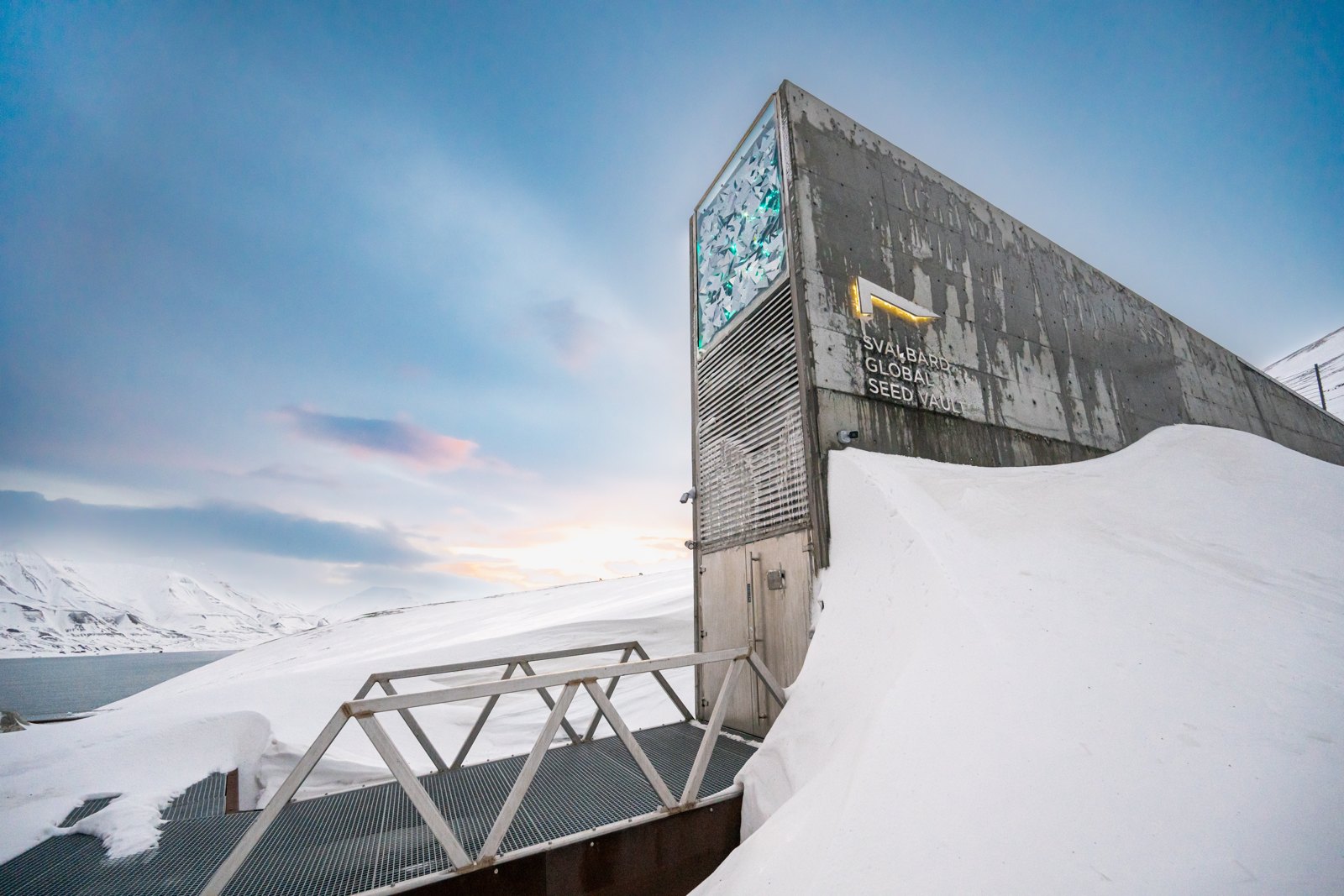
The Svalbard Global Seed Vault opened on February 26, 2008, near Longyearbyen in the Norwegian Arctic. Its storage chambers sit more than 100 metres inside solid rock and well above sea level. Mechanical cooling holds the rooms at −18 °C. The mountain’s cold, dry setting slows warming if equipment fails, though the facility still relies on monitoring, maintenance, and reliable refrigeration.
Depositors dry seeds, seal them in custom three-ply foil packets, and pack them into numbered boxes. The vault follows a “black box” arrangement: the depositing institution retains ownership and remains the only institution allowed to withdraw its material. Svalbard stores safety duplicates from established genebanks; it is not a public seed library and does not replace the active collections used for research and crop breeding.
By June 2026 the vault held more than 1.4 million seed samples from 134 institutions, against a designed capacity of 4.5 million samples. A sample is an accession—a documented population or variety—rather than one individual seed. Packets commonly contain hundreds of seeds, so the accession count describes the breadth of the backup collection more clearly than a raw seed total.
The backup system has already been used. Conflict made ICARDA’s genebank near Aleppo inaccessible, and the organization withdrew duplicate samples from Svalbard between 2015 and 2019. Staff regenerated those crops in Lebanon and Morocco, rebuilt active collections, and sent new duplicates back to the vault. The cycle demonstrated recovery rather than one-way storage.
The vault protects orthodox seeds that tolerate drying and freezing. Crops maintained as living plants, tissues, or other material need different conservation methods, and stored packets do not renew themselves. Genebanks must grow ageing accessions, test viability, preserve documentation, distribute material, and prepare fresh seed for another storage cycle. The mountain secures a backup while the wider network keeps it scientifically useful.
Svalbard’s climate is changing despite its high-Arctic location. Water entered the access tunnel during an unusually warm period in 2016 without reaching the seed chambers. Norway later waterproofed the tunnel, removed heat sources, and added drainage. The episode did not destroy seeds, but it showed why a long-lived safeguard has to be revised as environmental assumptions change.