A CLOSER LOOK
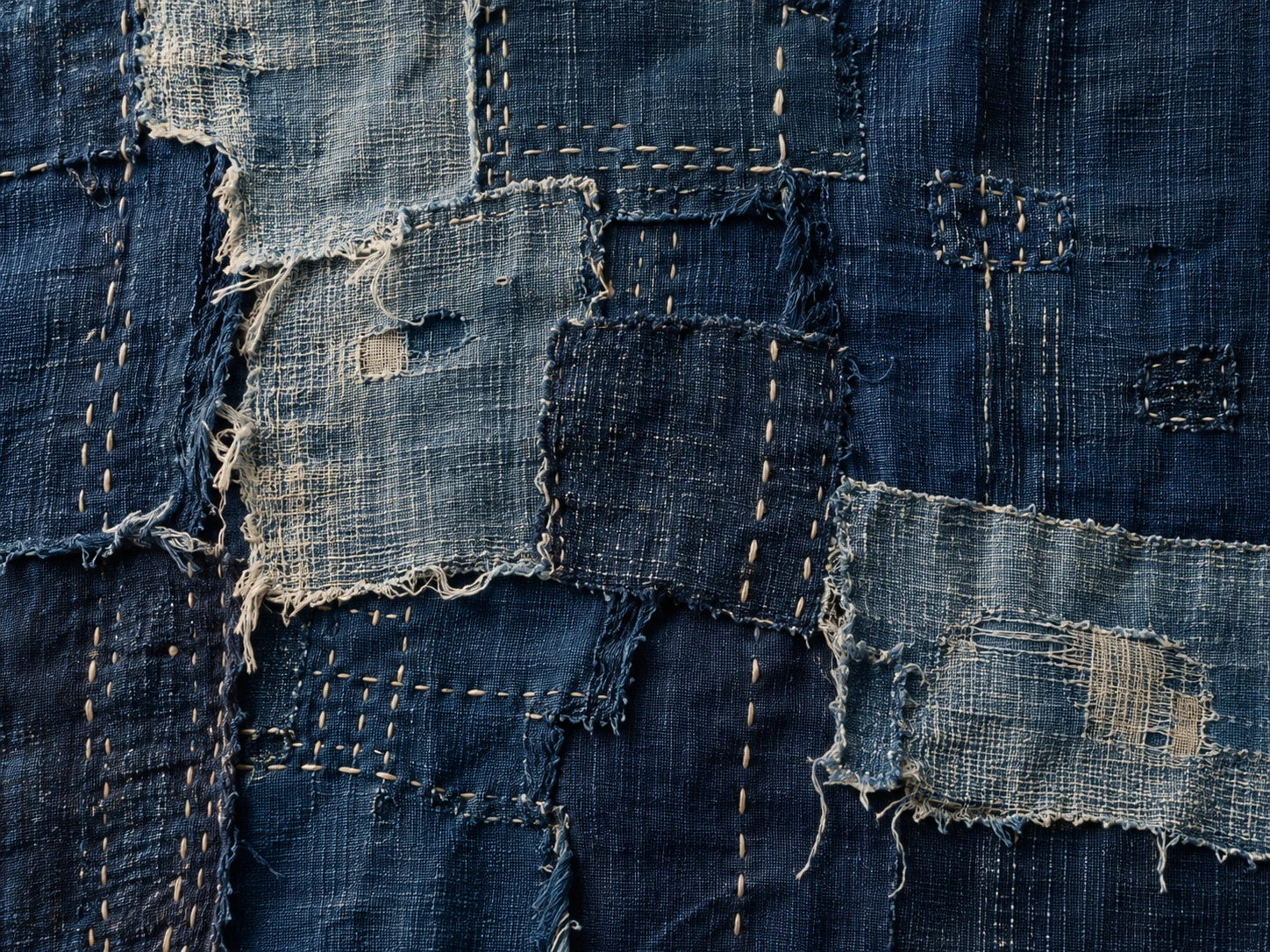
Boro describes Japanese textiles made by patching worn areas or joining pieces from older cloth. Makers often used sashiko, a running-stitch technique, to hold layers together and strengthen weak fabric. The dense seams were practical construction: repeated repair could keep clothing, bedding, and work cloth in service long after the original material began to fail.
The Victoria and Albert Museum connects surviving boro with poor rural families of the nineteenth and early twentieth centuries. Indigo-dyed hemp was used before cotton became more available. The Metropolitan Museum of Art likewise describes sashiko as a way for farmers and other workers to reinforce cloth, join recycled pieces, and create warmer, more durable garments. Decorative patterns grew within that practical tradition.
A cotton robe in the V&A collection, dated 1850–1900, is assembled entirely from recycled indigo cloth. Its shredded left sleeve records especially heavy wear and may indicate a left-handed wearer. The triangular sleeve shape may reflect the scraps available when it was made. Those details turn an anonymous garment into evidence about repeated use and adaptation.
Boro is now displayed in museums and has influenced contemporary visible-mending aesthetics. Its historical setting still matters. Many examples survive because cloth was valuable and replacement was difficult, so their beauty developed within conditions of labor and limited means. The repairs should be read as material decisions made over time, with regional and household practices that cannot be reduced to one fixed pattern.