A CLOSER LOOK
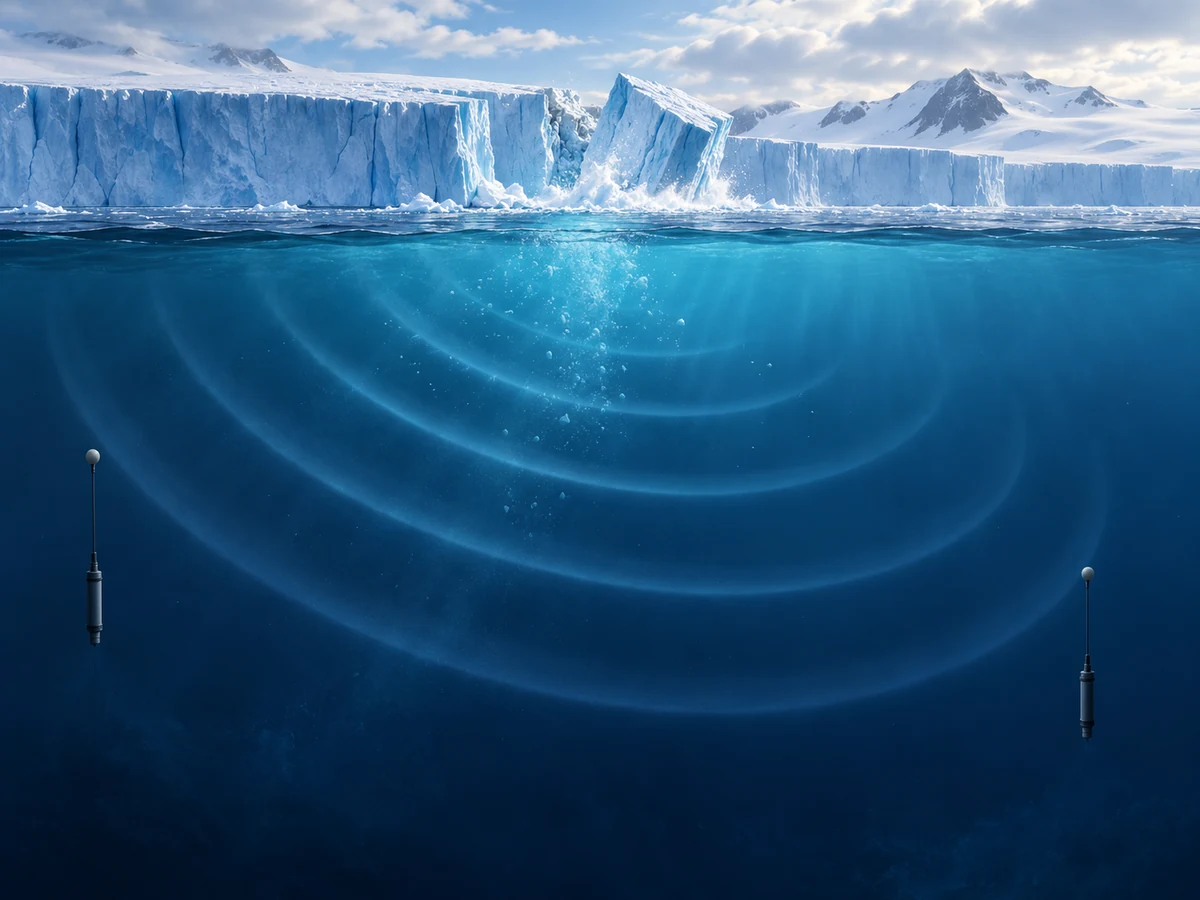
NOAA researchers recorded the sound in 1997 while listening for underwater volcanic activity. Sensors separated by more than 3,219 kilometers detected multiple instances, showing that the signal carried across a vast reach of the Pacific. Its rising, resonant character led researchers to nickname it “the Bloop.”
The instruments were hydrophones: underwater sensors that convert pressure changes into small electrical signals. Sound moves through seawater at roughly 1,500 meters per second, and conditions in the deep ocean can bend waves into channels that preserve their energy over long distances. A separated array lets researchers compare arrival times and recognize the same event at several stations.
NOAA’s later work placed comparable sounds near Antarctica. By 2005, researchers had identified their source as icequakes associated with an iceberg cracking and separating from a glacier. The interpretation came from accumulating observations closer to the ice, giving the earlier recording a physical explanation grounded in glacial activity.
Recordings often circulate at altered playback speeds because the original low frequencies are difficult to hear on ordinary speakers. The memorable audio is therefore a representation of the measured signal. Its scientific value comes from the waveform, the sensor network, location evidence, and comparison with later ice sounds.