A CLOSER LOOK
Leland W. Sprinkle, a mathematician and electronics scientist who worked at the Pentagon, conceived the instrument after visiting Luray Caverns in 1954. He spent three years selecting formations and building the system. The finished instrument uses thirty-seven stalactites distributed through roughly three and a half acres of the cavern.
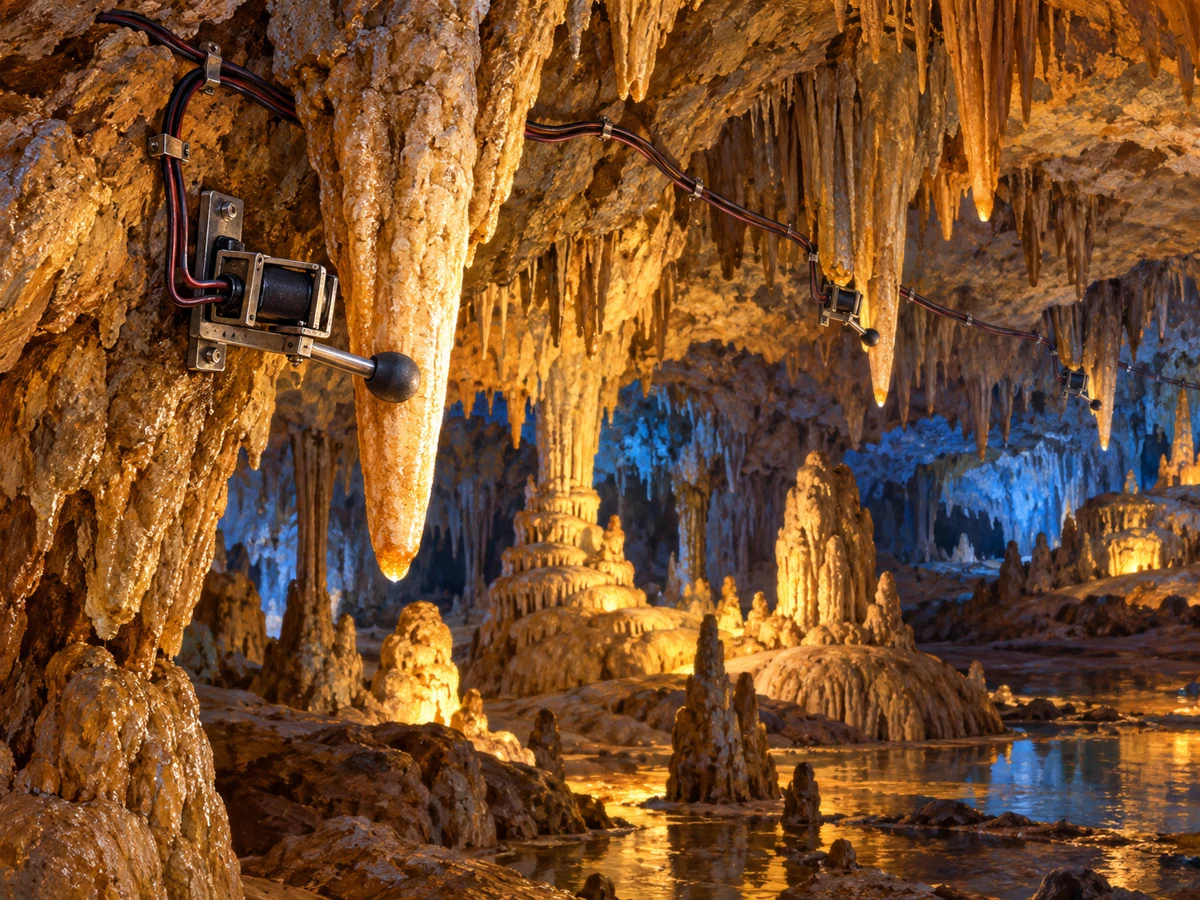
The console resembles a pipe organ, though it does not send air through pipes. Each key sends an electrical signal to a solenoid, which moves a rubber-tipped striker against a selected stalactite. The impact sets the stone vibrating and the cavern carries the resulting tone. This makes the instrument an electrically actuated lithophone.
Sprinkle tuned thirty-five of the selected stalactites by carefully removing small amounts of stone; two already sounded the required pitches. Several miles of wiring connect the console to formations positioned around the chamber. The instrument can sound acoustically through the cave, while amplification helps visitors hear a more balanced performance from one location.
A stalactite is part of a continuing cave environment rather than a manufactured replacement part. High humidity affects electrical and mechanical components, and the formations cannot be rearranged like metal bars in an ordinary percussion instrument. Maintenance therefore protects a system built around fixed geological material.
The phrase “world’s largest instrument” refers to the area occupied by its sounding components, not the size of the keyboard or the loudness of a performance. Listen for the bell-like attack of individual stones and the long reverberation added by the cavern. The cave supplies both the notes and the room in which they are heard.