A CLOSER LOOK
Project Gutenberg identifies Isänmaa as a Finnish-language novel by Arvid Järnefelt, first published in 1893. The title can refer to homeland or fatherland. This page keeps the Finnish title because a single English word would flatten the personal, familial, and national meanings developed by the story.
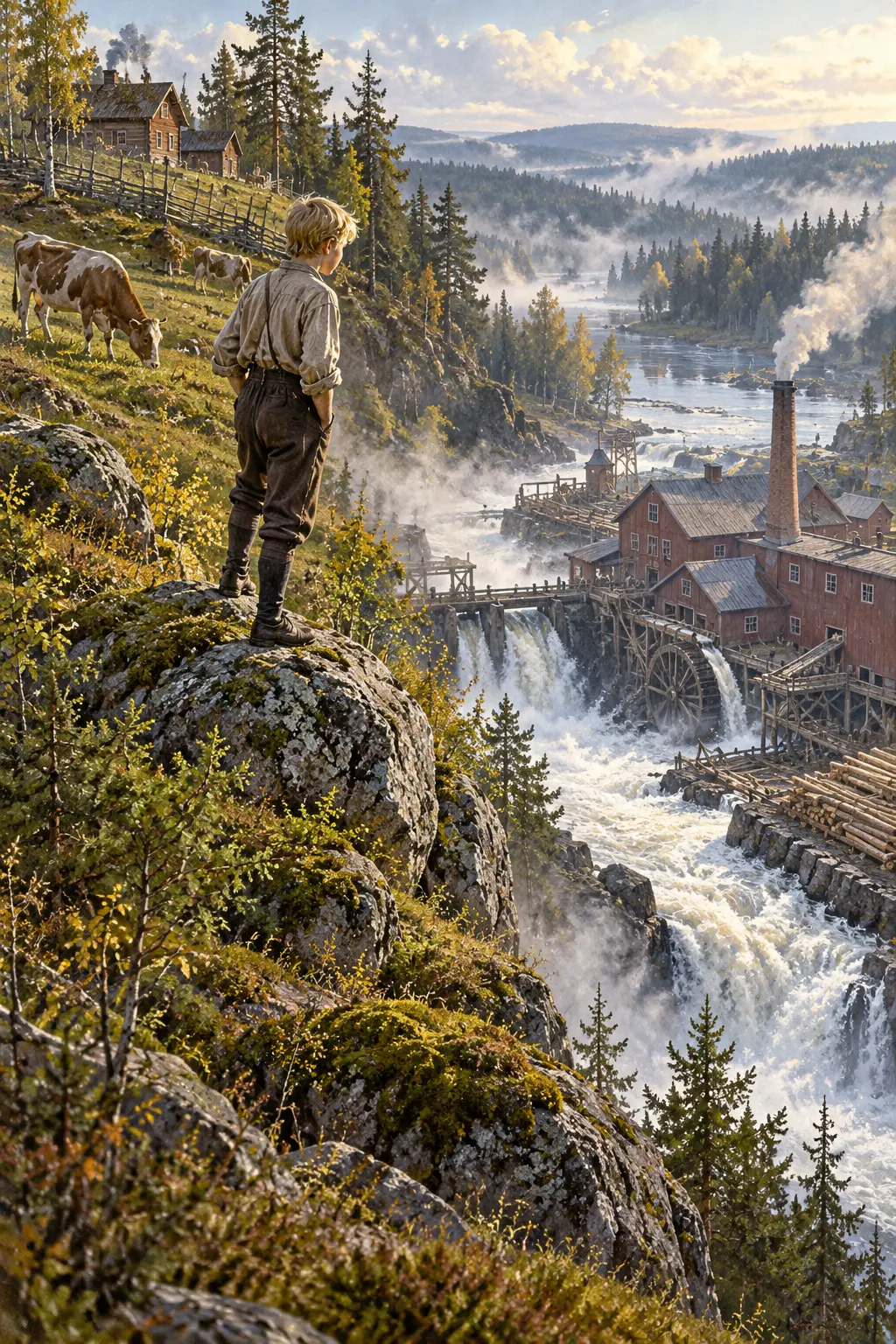
The novel opens between two farms separated by Taivalkoski, a powerful waterfall. An outsider buys forests and leases the falls, then profits when industrial buyers acquire the timber and build a sawmill. Paid work draws men away from sowing, women and children into construction, and families into a new economy whose immediate wages conceal lasting changes in land and dependency.
That transformation is staged through Vuorela, the established hill farm, and Uusniemelä, rebuilt with money, imported cattle, hired labor, newspapers, and new social influence. The opposition is complicated: inherited stability carries pride and resistance, while industrial novelty brings knowledge, opportunity, exploitation, and disruption together.
Heikki first sees the mill from a large rock while herding cattle. Smoke, water, machinery, and moving people fascinate him even as his family distrusts the place. His viewpoint gives the novel a precise tension: modernization is experienced as wonder before it is understood as ideology. This interpretation is based on the Finnish text and catalog record; English wording here is a summary rather than a published translation.