YOUR NEXT DISCOVERY/ArtifactsFollow your curiosity
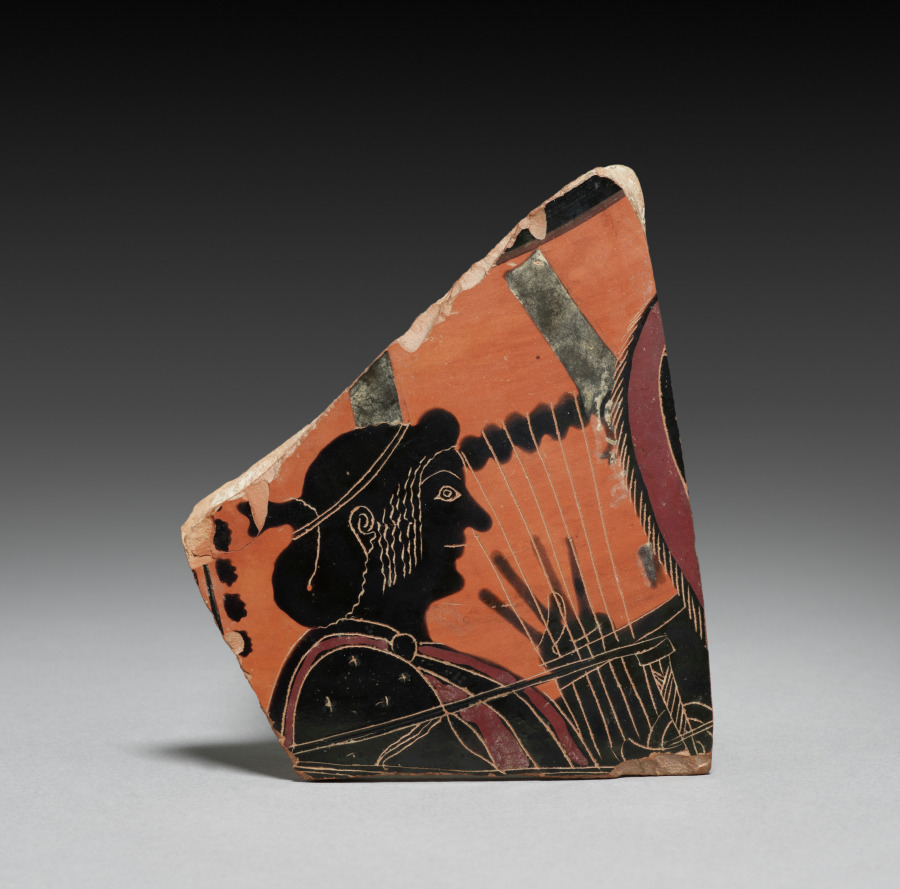
Fragment from Black-Figure Neck-Amphora of Panathenaic Shape (Storage Vessel): Apollo with Lyre, from The Cleveland Museum of Art
The Cleveland Museum of Art · Open Access · Reuse terms

Greek, Attic / c. 520 BCE

Fragment from Black-Figure Neck-Amphora of Panathenaic Shape (Storage Vessel): Apollo with Lyre

Fragment from Black-Figure Neck-Amphora of Panathenaic Shape (Storage Vessel): Apollo with Lyre

The Cleveland Museum of Art catalogs Fragment from Black-Figure Neck-Amphora of Panathenaic Shape (Storage Vessel): Apollo with Lyre as ceramic (Greek, Attic · c. 520 BCE).

Although only two fragments survive from this vase, both show Apollo, here playing his lyre.

SERENDIPITYA little unexpected
FamiliarWeird

The museum identifies this ceramic as ceramic and credits Antimenes Painter (Greek, Attic, active c. 530–510 BCE).

The museum's collection notes: With so little preserved, the precise subject once shown on this vase remains uncertain. Along with Apollo playing his lyre, parts of the mane and reins of a horse remain, suggesting a chariot procession—perhaps for the wedding of Peleus and Thetis, an event attended by the Olympian gods.

The Cleveland Museum of ArtFragment from Black-Figure Neck-Amphora of Panathenaic Shape (Storage Vessel): Apollo with Lyre

Original explanation based on the sources above. Images carry their own reuse terms.