YOUR NEXT DISCOVERY/SpaceFollow your curiosity
Space Science
NASA / MSFC · Reuse terms

Space / 2002-04-07

Space Science

Space Science

NASA's image library records Space Science.

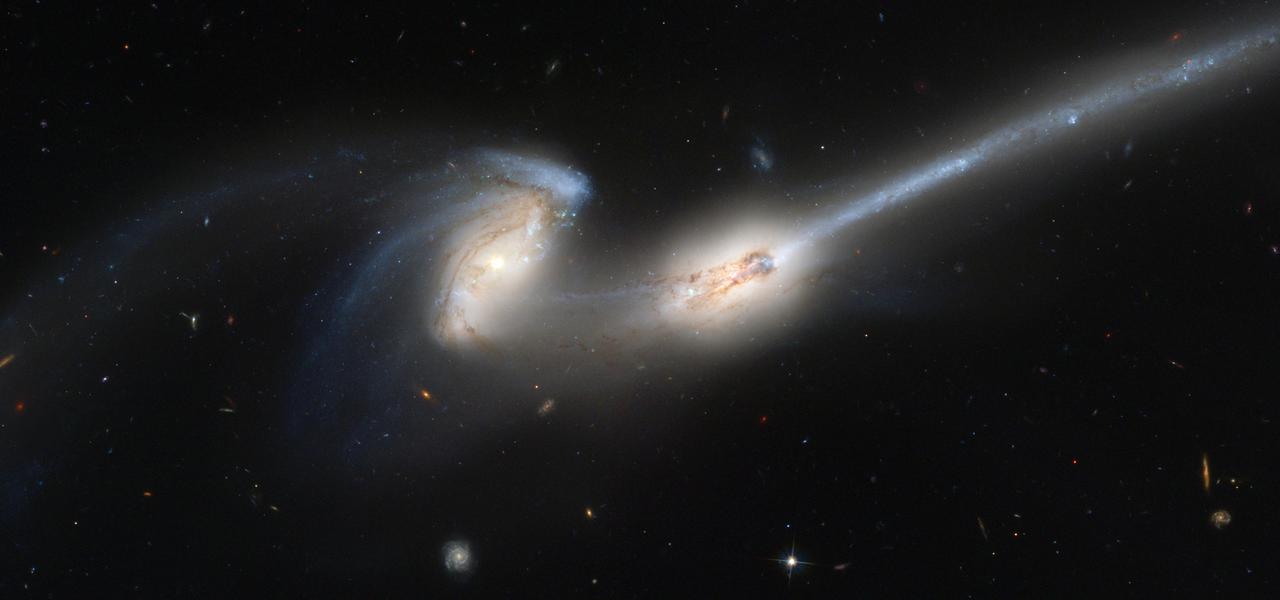
The Advanced Camera for Surveys (ACS), the newest camera on the Hubble Space Telescope, has captured a spectacular pair of galaxies. Located 300 million light-years away in the constellation Coma Berenices, the colliding galaxies have been nicknamed "The Mice" because of the long tails of stars and gas emanating from each galaxy. Otherwise known as

SERENDIPITYA little unexpected
FamiliarWeird

The Advanced Camera for Surveys (ACS), the newest camera on the Hubble Space Telescope, has captured a spectacular pair of galaxies. Located 300 million light-years away in the constellation Coma Berenices, the colliding galaxies have been nicknamed "The Mice" because of the long tails of stars and gas emanating from each galaxy. Otherwise known as NGC 4676, the pair will eventually merge into a single giant galaxy. In the galaxy at left, the bright blue patch is resolved into a vigorous cascade of clusters and associations of young, hot blue stars, whose formation has been triggered by the tidal forces of the gravitational interaction. The clumps of young stars in the long, straight tidal tail (upper right) are separated by fainter regions of material. These dim regions suggest that the c

Explore NASA's original image record for credits and available downloads.

NASA Image and Video LibrarySpace Science

Original explanation based on the sources above. Images carry their own reuse terms.