YOUR NEXT DISCOVERY/SpaceFollow your curiosity
Space Science
NASA / MSFC · Reuse terms

Space / 2002-01-01

Space Science

Space Science

NASA's image library records Space Science.

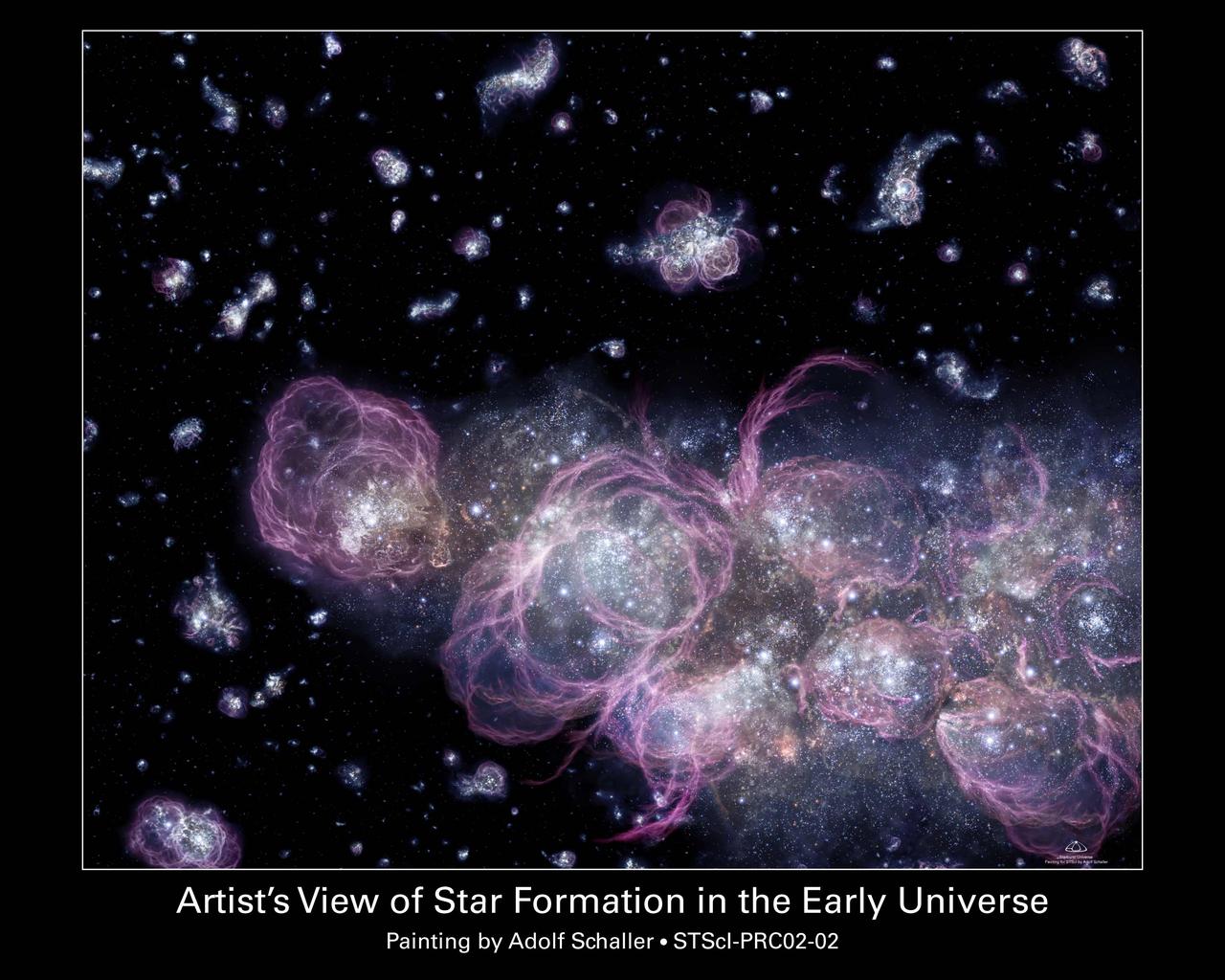
This is an artist's impression of how the very early universe (less than one billion years old) might have looked when it went through a voracious onset of star formation, converting primordial hydrogen into myriad stars at an unprecedented rate. The deepest views of the cosmos from the Hubble Space Telescope (HST) yield clues that the very first s

SERENDIPITYA little unexpected
FamiliarWeird

This is an artist's impression of how the very early universe (less than one billion years old) might have looked when it went through a voracious onset of star formation, converting primordial hydrogen into myriad stars at an unprecedented rate. The deepest views of the cosmos from the Hubble Space Telescope (HST) yield clues that the very first stars may have burst into the universe as brilliantly and spectacularly as a firework finale. Except in this case, the finale came first, long before Earth, the Sun ,and the Milky Way Galaxy formed. Studies of HST's deepest views of the heavens lead to the preliminary conclusion that the universe made a significant portion of its stars in a torrential firestorm of star birth, which abruptly lit up the pitch-dark heavens just a few hundred million

Explore NASA's original image record for credits and available downloads.

NASA Image and Video LibrarySpace Science

Original explanation based on the sources above. Images carry their own reuse terms.