YOUR NEXT DISCOVERY/ArtifactsFollow your curiosity
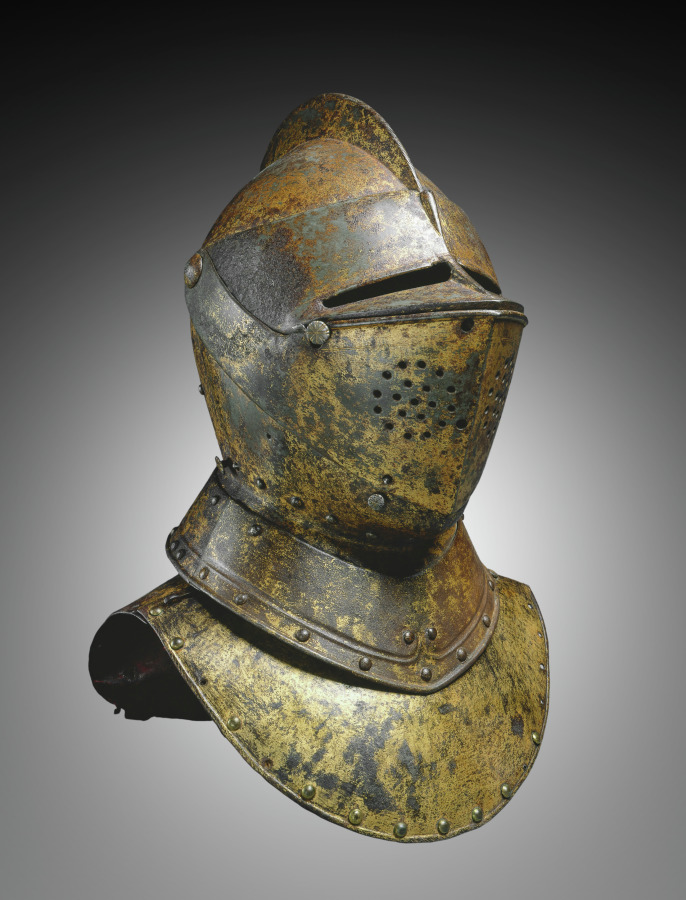
Close Helmet (from a funerary achievement?), from The Cleveland Museum of Art
The Cleveland Museum of Art · Open Access · Reuse terms

Holland (?), late 16th-early 17th Century / c.1590–1625

Close Helmet (from a funerary achievement?)

Close Helmet (from a funerary achievement?)

The Cleveland Museum of Art catalogs Close Helmet (from a funerary achievement?) as arms and armor (Holland (?), late 16th-early 17th Century · c.1590–1625).

This helmet was decorated with a technique known as fire-gilding, an incredibly toxic process involving mercury that produced a gold finish, now worn away.

SERENDIPITYA little unexpected
FamiliarWeird

The museum identifies this arms and armor as gilded steel (invaded with rust); red velvet lining, plume holder.

The museum's collection notes: This helmet was originally intended for field use. Later, it seems to have served a funerary purpose, probably as an ornament (known as a funerary achievement) suspended over the church tomb of an unidentified knight. As such, it would have been a rich and imposing symbol of the dead knight's social rank and personal authority.

The Cleveland Museum of ArtClose Helmet (from a funerary achievement?)

Original explanation based on the sources above. Images carry their own reuse terms.