YOUR NEXT DISCOVERY/ArtifactsFollow your curiosity
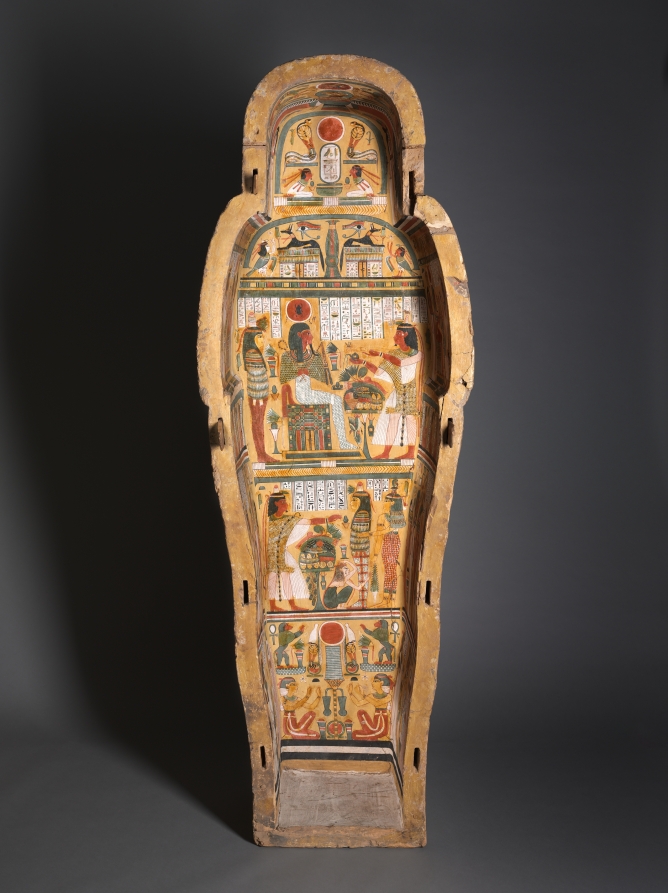
Coffin of Nesykhonsu, from The Cleveland Museum of Art
The Cleveland Museum of Art · Open Access · Reuse terms

Egypt, Thebes, Third Intermediate (1069–715 BCE), Dynasties 21–22 / c. 976–889 BCE

Coffin of Nesykhonsu

Coffin of Nesykhonsu

The Cleveland Museum of Art catalogs Coffin of Nesykhonsu as funerary equipment (Egypt, Thebes, Third Intermediate (1069–715 BCE), Dynasties 21–22 · c. 976–889 BCE).

Two of Nesykhonsu's titles, "Lady of the House" and "Singer of the Choir of Mut the Great," are written on the outside of the coffin.

SERENDIPITYA little unexpected
FamiliarWeird

The museum identifies this funerary equipment as gessoed and painted sycamore fig.

The museum's collection notes: Egyptian coffins told stories and illustrated spells to help the deceased transition safely to the afterlife. Inside Nesykhonsu's coffin there are two jackals, one facing right and the other left, near the top. Here, the jackal represents the powerful deity Anubis, the god of the afterlife and embalming.

The Cleveland Museum of ArtCoffin of Nesykhonsu

Original explanation based on the sources above. Images carry their own reuse terms.