A CLOSER LOOK
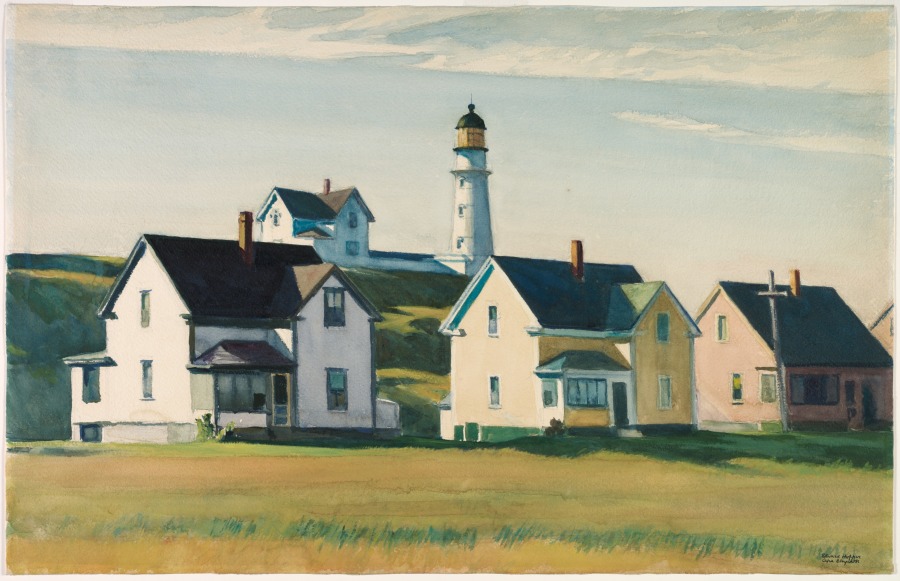
The museum identifies this drawing as Watercolor with graphite and scraping on paper and credits Edward Hopper (American, 1882–1967).
The museum's collection notes: Edward Hopper made this watercolor during the last of several painting excursions that he took to Maine. He had painted the lighthouse at Cape Elizabeth once two years before, but found the structure so interesting that he returned to it in this drawing. Hopper was especially attracted to the varying green tones of the grass and the combination of buildings, each with a different purpose, including one where the lighthouse keepers slept and the three at the bottom where coast guard families lived. He used a slightly different tone of watercolor for each of the structures to accurately convey the reflection of light on them.