A CLOSER LOOK
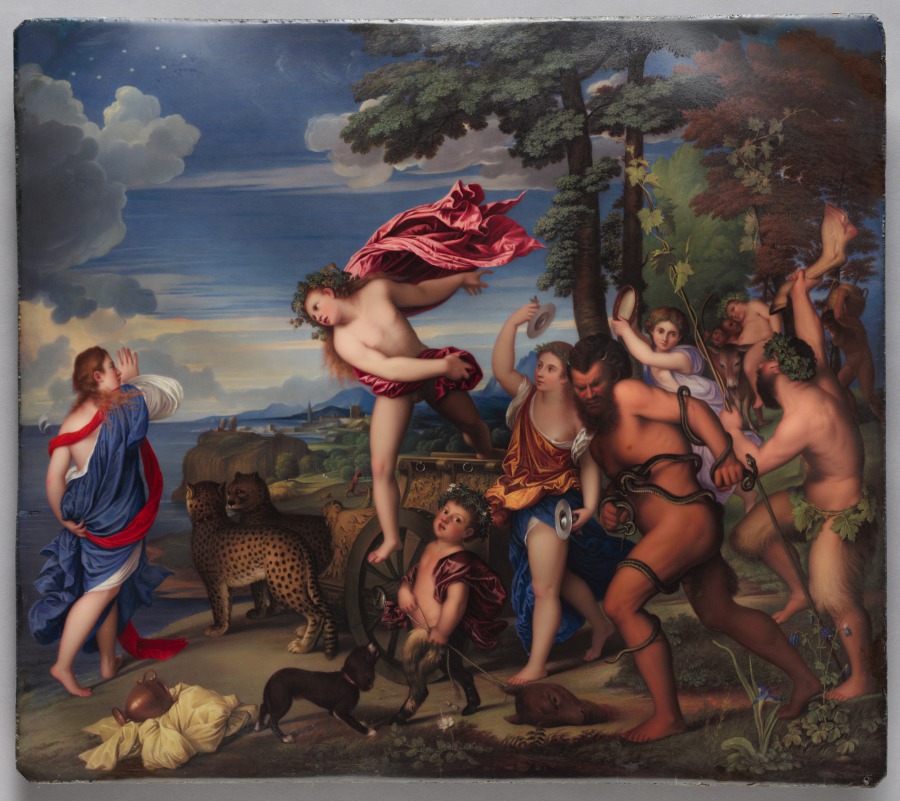
The museum identifies this painting as enamel, in original gilt-wood and gesso carved frame and credits Henry Bone (British, 1755–1834).
The museum's collection notes: Henry Bone devoted three years to creating this work, a tremendous technical achievement and the largest enamel on copper that had ever been made. The painstaking process required each application of color to be fired at a different temperature in the kiln. The enamel exactly reproduces Titian’s Bacchus and Ariadne (now in the National Gallery, London), an early sixteenth-century Italian masterpiece that had recently come into an English collection. The elaborate carved and gilded wood frame was specially designed for the work, an indication of the cultural value placed on great enamel reproductions of famous paintings. Bone was unable to sho