YOUR NEXT DISCOVERY/ArtifactsFollow your curiosity
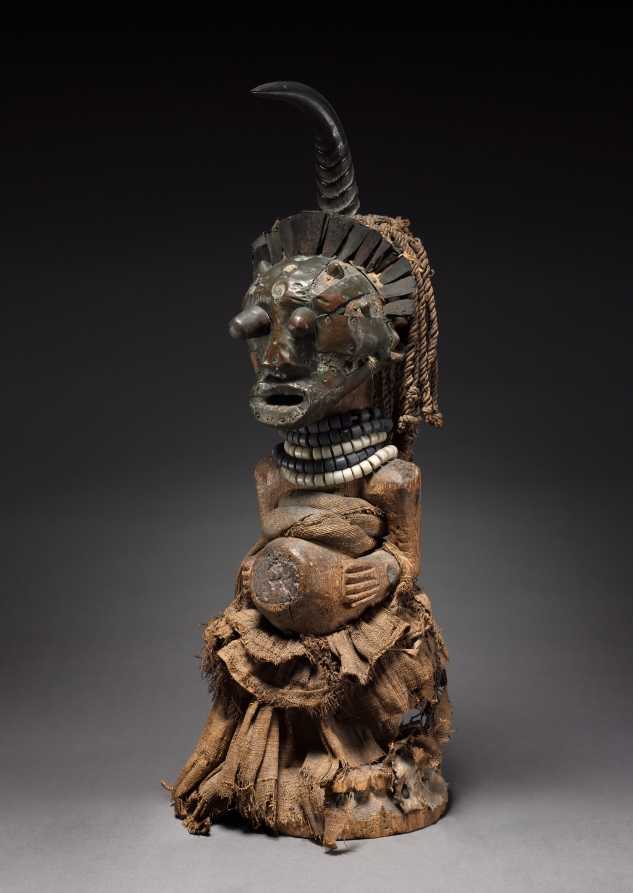
Male Figure (nkishi), from The Cleveland Museum of Art
The Cleveland Museum of Art · Open Access · Reuse terms

Africa, Central Africa, Democratic Republic of Congo, Songye-style carver and nganga (priest) / late 1800s–early 1900s

Male Figure (nkishi)

Male Figure (nkishi)

The Cleveland Museum of Art catalogs Male Figure (nkishi) as sculpture (Africa, Central Africa, Democratic Republic of Congo, Songye-style carver and nganga (priest) · late 1800s–early 1900s).

Researchers conducted X-ray scanning on this figure, revealing its internal structure and human teeth, an antelope horn, and animal hair.

SERENDIPITYA little unexpected
FamiliarWeird

The museum identifies this sculpture as Wood, glass beads, brass (including upholstery studs), copper alloy, iron alloy, raffia, reedbuck antelope horn, rawhide, animal hair, human.

The museum's collection notes: This figure's visual impact and workmanship suggest that an extended family––rather than an individual––used it. The raffia skirt around the waist and the blue and white beads are indicators of leadership. The metal appliqué covering the face and the metal blades that hedge the headgear refer to the blacksmith, a culture hero celebrated in a Songye myth narrating the formation of the state. The metal strips on the skeletal face are said to relate to lightning, signaling the figure's role as a powerful anti-sorcerer, but the contrast between white iron and red copper symbolically alludes to the ambivalent powers of the figure.

The Cleveland Museum of ArtMale Figure (nkishi)

Original explanation based on the sources above. Images carry their own reuse terms.