A CLOSER LOOK
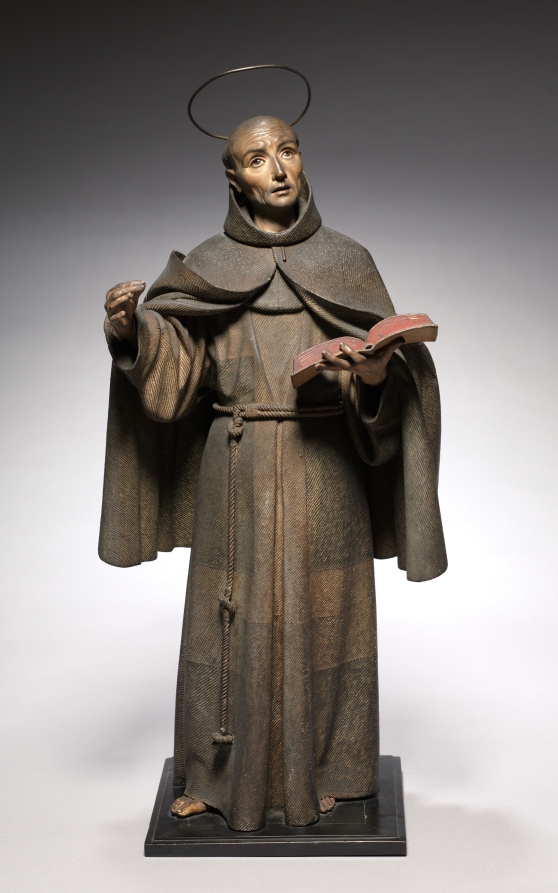
The museum identifies this sculpture as painted wood, with ivory and glass and credits Pedro de Mena (Spanish, 1628–1688).
The museum's collection notes: Painted wood sculpture from Spain in the 1600s involved a team of artisans working under a lead sculptor. The sculptor first carved numerous pieces of wood in complex forms. So the paint would stick properly, these fragments were delicately covered in gesso (a combination of white chalk and glue made from animal collagen), preserving the subtle woodcarving underneath. The rough surface of the saint's face—reflecting his age and hardships—came from texturing the gesso with a brush. The glass eyes, probably imported from Venice, were inserted from behind the face before the wood pieces were attached. Finally, the eyelashes were added for a furt