YOUR NEXT DISCOVERY/ArtifactsFollow your curiosity
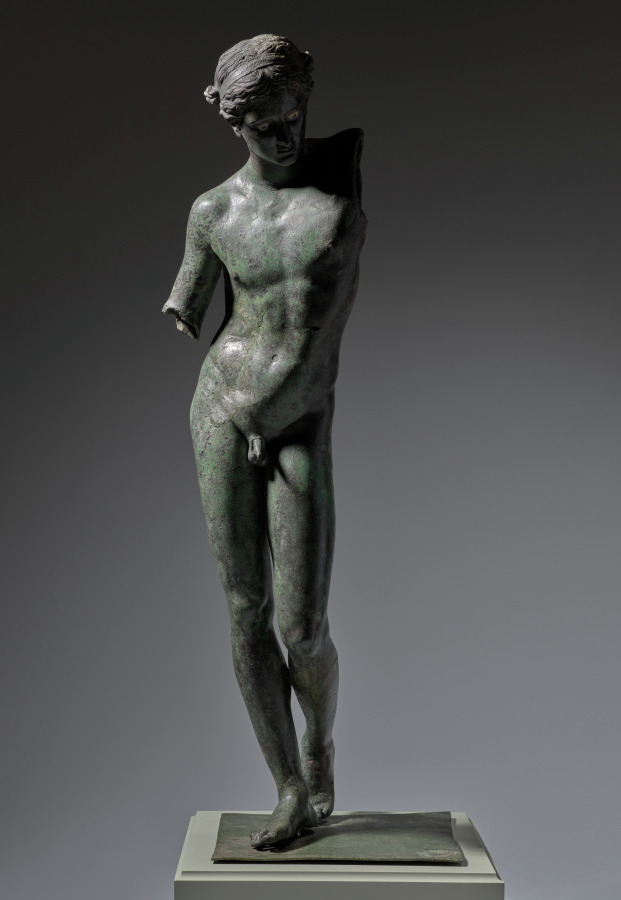
The Cleveland Apollo: Apollo Sauroktonos (Lizard-Slayer) or Apollo the Python-Slayer, from The Cleveland Museum of Art
The Cleveland Museum of Art · Open Access · Reuse terms

Greece, Athens / c. 350–200 BCE

The Cleveland Apollo: Apollo Sauroktonos (Lizard-Slayer) or Apollo the Python-Slayer

The Cleveland Apollo: Apollo Sauroktonos (Lizard-Slayer) or Apollo the Python-Slayer

The Cleveland Museum of Art catalogs The Cleveland Apollo: Apollo Sauroktonos (Lizard-Slayer) or Apollo the Python-Slayer as sculpture (Greece, Athens · c. 350–200 BCE).

The Cleveland Apollo is the only surviving large-scale bronze sculpture of its type, Apollo Sauroktonos (the Lizard-Slayer).

SERENDIPITYA little unexpected
FamiliarWeird

The museum identifies this sculpture as bronze, copper, and stone inlay and credits Praxiteles (Greek, Athenian, c. 400–330 BCE).

The museum's collection notes: The Cleveland Apollo has been called both Lizard-Slayer ( Sauroktonos ) and Python-Slayer. The first name comes from the Roman author Pliny the Elder (23–79 CE), who noted in describing bronze works made by the Athenian sculptor Praxiteles (active around 370–330 BCE), “the youthful Apollo [is] known as the Sauroktonos because he is aiming an arrow at a lizard [Greek sauros ] which is stealing toward him.” Scholars have long connected this description with artworks showing the young Greek god Apollo in a distinctive pose and hairstyle, standing on his right leg and leaning to his left. In more completely preserved versions, Apollo reaches towa

The Cleveland Museum of ArtThe Cleveland Apollo: Apollo Sauroktonos (Lizard-Slayer) or Apollo the Python-Slayer

Original explanation based on the sources above. Images carry their own reuse terms.