YOUR NEXT DISCOVERY/ArtifactsFollow your curiosity
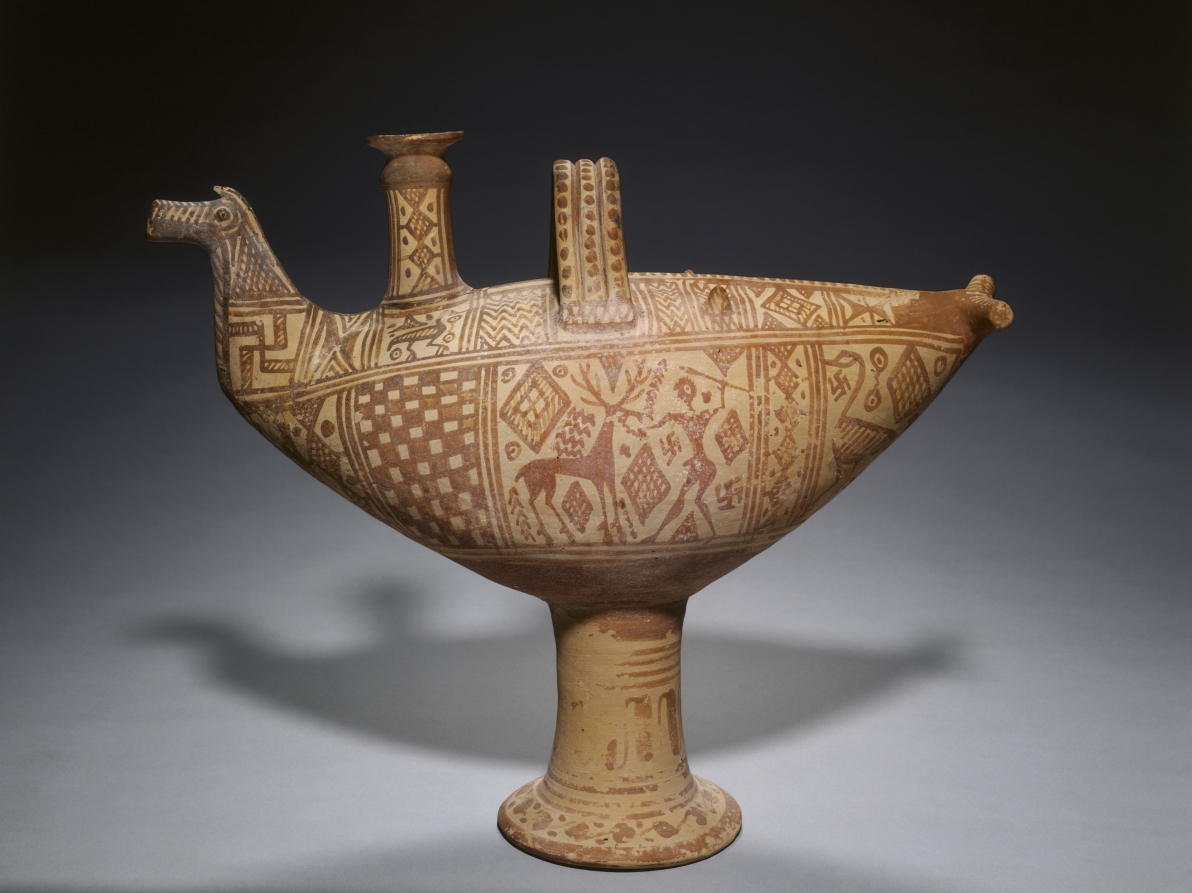
Italo-Geometric Bird Askos (Oil Vessel): Hunter (Herakles?) and Stag, from The Cleveland Museum of Art
The Cleveland Museum of Art · Open Access · Reuse terms

Etruscan, likely made at Vulci / c. 700 BCE

Italo-Geometric Bird Askos (Oil Vessel): Hunter (Herakles?) and Stag

Italo-Geometric Bird Askos (Oil Vessel): Hunter (Herakles?) and Stag

The Cleveland Museum of Art catalogs Italo-Geometric Bird Askos (Oil Vessel): Hunter (Herakles?) and Stag as ceramic (Etruscan, likely made at Vulci · c. 700 BCE).

This askos may feature the earliest known representation of Herakles's third labor, the Keryneian hind.

SERENDIPITYA little unexpected
FamiliarWeird

The museum identifies this ceramic as ceramic and credits Bisenzio Class.

The museum's collection notes: This bird-shaped askos (oil vessel), with a tall filling spout and a pierced beak for pouring, perhaps held perfumed oil for a funerary function. Although the shape likely stems from Italian tradition, the abundantly painted geometric decoration, covering nearly every available surface, derives originally from Greece. Thus scholars have suggested that an immigrant Greek potter working in Etruria may have made the vessel. The sole narrative scene shows a man with a spear leading an antlered animal. If not an anonymous hunter, this could be the earliest known representation of the hero Herakles performing his third labor: capturing the golden-a

The Cleveland Museum of ArtItalo-Geometric Bird Askos (Oil Vessel): Hunter (Herakles?) and Stag

Original explanation based on the sources above. Images carry their own reuse terms.