YOUR NEXT DISCOVERY/ArtifactsFollow your curiosity
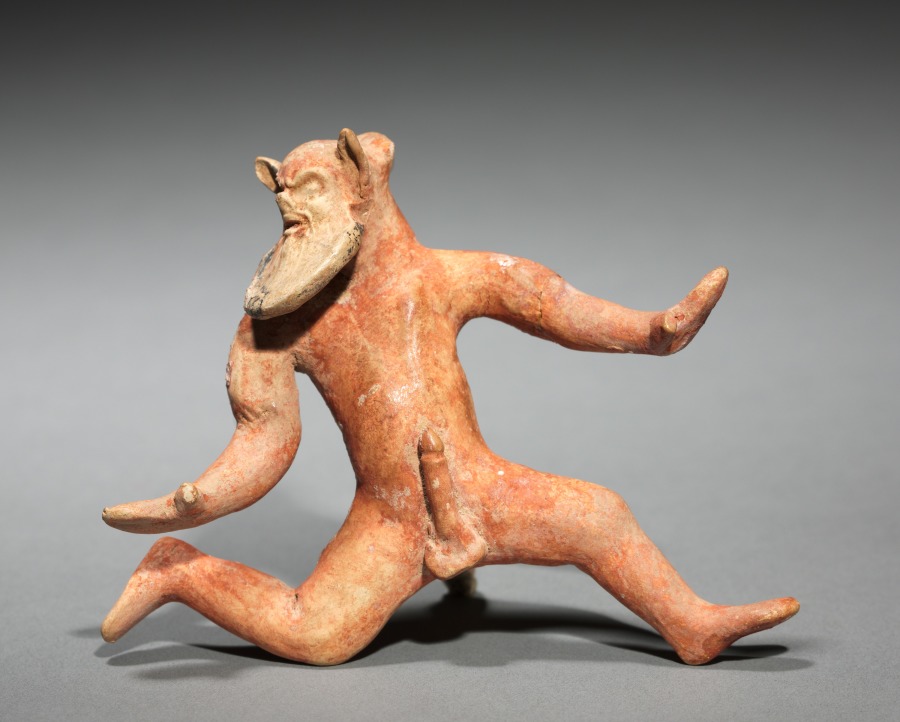
Dancing Satyr Group, from The Cleveland Museum of Art
The Cleveland Museum of Art · Open Access · Reuse terms

Greece, Boeotia / 500–475 BCE

Dancing Satyr Group

Dancing Satyr Group

The Cleveland Museum of Art catalogs Dancing Satyr Group as sculpture (Greece, Boeotia · 500–475 BCE).

Satyrs, or lustful, drunken woodland gods, are the biggest partiers in ancient Greek mythology.

SERENDIPITYA little unexpected
FamiliarWeird

The museum identifies this sculpture as painted terracotta.

The museum's collection notes: Part man and part beast, satyrs were mythical woodland creatures. In art, they were depicted with the ears and tail of a goat or horse, sometimes with hooves, and in a high state of sexual arousal. Satyrs often accompanied Dionysus, the god of wine, in his drinking bouts and other escapades. These three probably once decorated the rim of a large punch-bowl-shaped vessel for serving wine.

The Cleveland Museum of ArtDancing Satyr Group

Original explanation based on the sources above. Images carry their own reuse terms.