A CLOSER LOOK
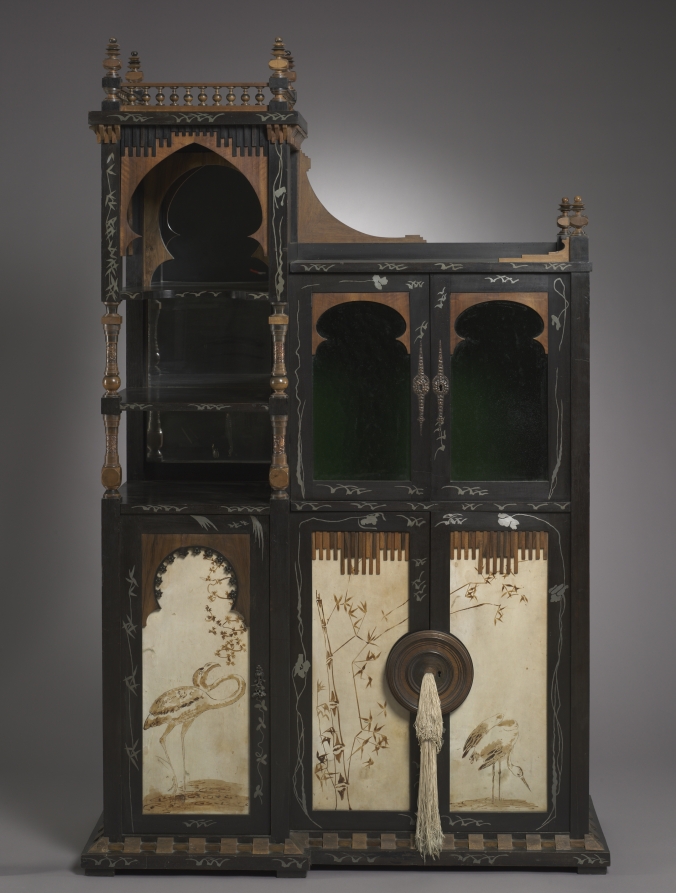
The museum identifies this furniture and woodwork as wood with metal inlays and painted parchment, glass doors and mirror and credits Carlo Bugatti (Italian, 1856–1940).
The museum's collection notes: In both form and decoration this cabinet typifies the work of Carlo Bugatti. Asymmetrical, with a tower-like element at one side, there are Islamic-inspired ornaments throughout its design, notably the onion-shaped arches in the upper half of the cabinet. Japanese influence is also evident in the white metal inlays and in the sepia-painted parchment panels. The cabinet displays an extensive vocabulary of other decorative devices, including the partial ebonized frame, the turned wooden ornaments, metal reliefs, mirrored and green glass, and silk tassels. Despite their diversity, Bugatti organized all these elements into a coherent design.