A CLOSER LOOK
The museum identifies this sculpture as gilded wood.
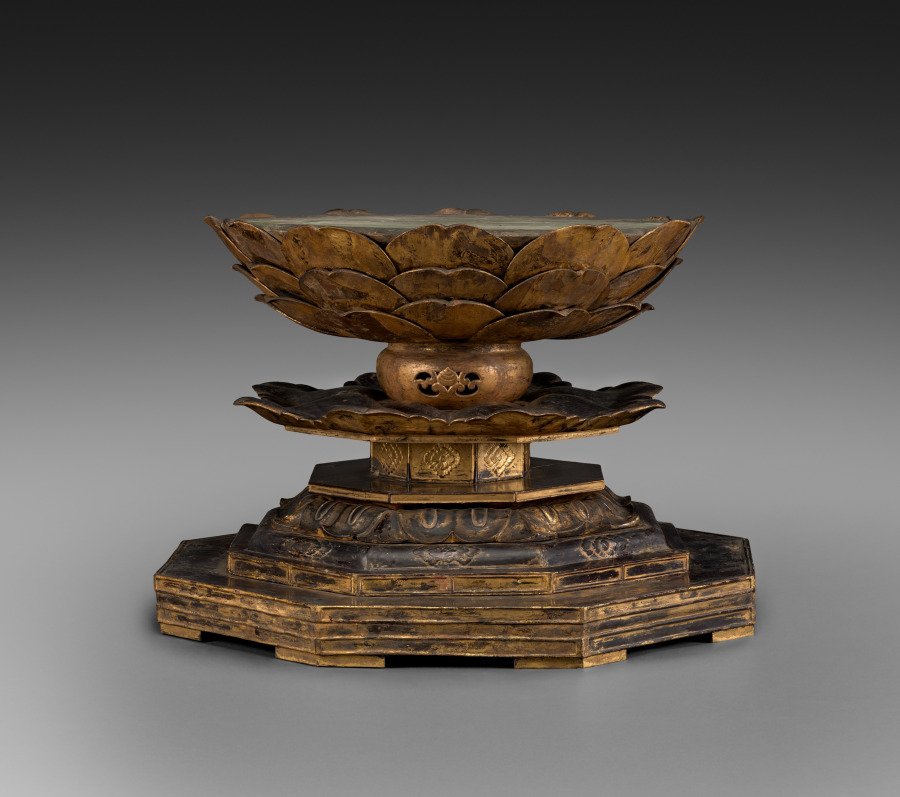
The museum's collection notes: Composed of a number of hollowed-out pieces of wood that were then covered with lacquer and gilding, this sculpture would have served as the principal image of worship in a Buddhist temple hall. The Buddha Yakushi resides in the Lapis Lazuli Paradise of the East, and heals all diseases, including the ailment of ignorance. His left hand once held a medicine jar, while his right hand gestures reassurance. Seated on a lotus pedestal and backed by a mandorla and halo, the Buddha may have once been flanked by the bodhisattvas of the Sun and Moon, Nikkō and Gakkō, and protected by the Twelve Divine Generals, or Junishinshō.