YOUR NEXT DISCOVERY/ArtifactsFollow your curiosity
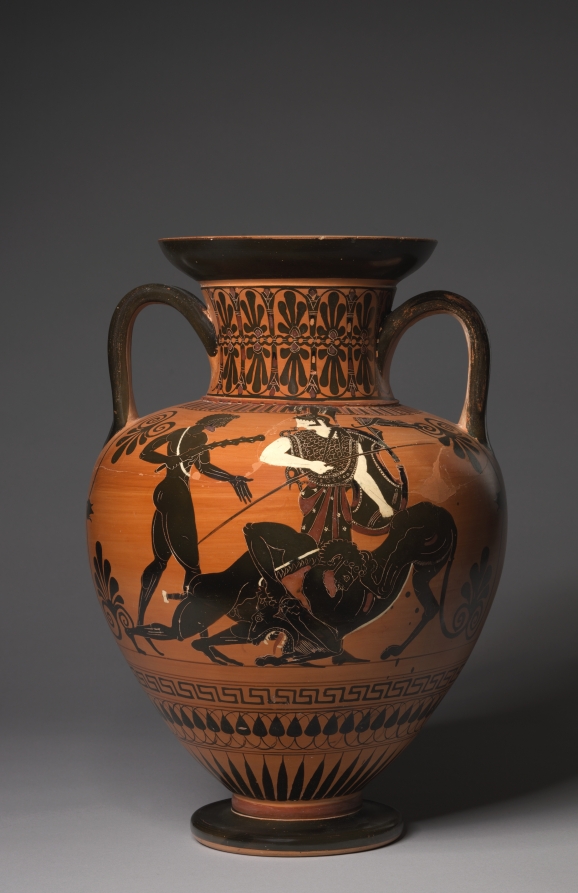
Black-Figure Neck-Amphora (Storage Vessel): Herakles and Nemean Lion (A); Dionysos, Satyrs, and Maenads (B), from The Cleveland Museum of Art
The Cleveland Museum of Art · Open Access · Reuse terms

Greek, Attic / 515–510 BCE

Black-Figure Neck-Amphora (Storage Vessel): Herakles and Nemean Lion (A); Dionysos, Satyrs, and Maenads (B)

Black-Figure Neck-Amphora (Storage Vessel): Herakles and Nemean Lion (A); Dionysos, Satyrs, and Maenads (B)

The Cleveland Museum of Art catalogs Black-Figure Neck-Amphora (Storage Vessel): Herakles and Nemean Lion (A); Dionysos, Satyrs, and Maenads (B) as ceramic (Greek, Attic · 515–510 BCE).

After Herakles strangled the Nemean lion, he wore its pelt as a protective trophy.

SERENDIPITYA little unexpected
FamiliarWeird

The museum identifies this ceramic as ceramic and credits Painter of Berlin 1899 (Greek, Attic).

The museum's collection notes: The neck-amphora, one of the most popular vase shapes in Archaic Athens, provided painters with ample space for both figural and ornamental decoration. Herakles, the greatest of Greek heroes, performs his most famous deed on the obverse, wrestling the Nemean lion. His patron goddess Athena, together with his nephew Iolaos, holding the hero’s club, stand by. On the other side is an unrelated scene, showing the wine god Dionysos with dancing maenads and satyrs. Abundant ornament covers other areas: stylized lotus blossom and palmette chains on the neck; intricately linked palmettes and lotuses beneath each handle; and a key pattern, linked lotu

The Cleveland Museum of ArtBlack-Figure Neck-Amphora (Storage Vessel): Herakles and Nemean Lion (A); Dionysos, Satyrs, and Maenads (B)

Original explanation based on the sources above. Images carry their own reuse terms.