A CLOSER LOOK
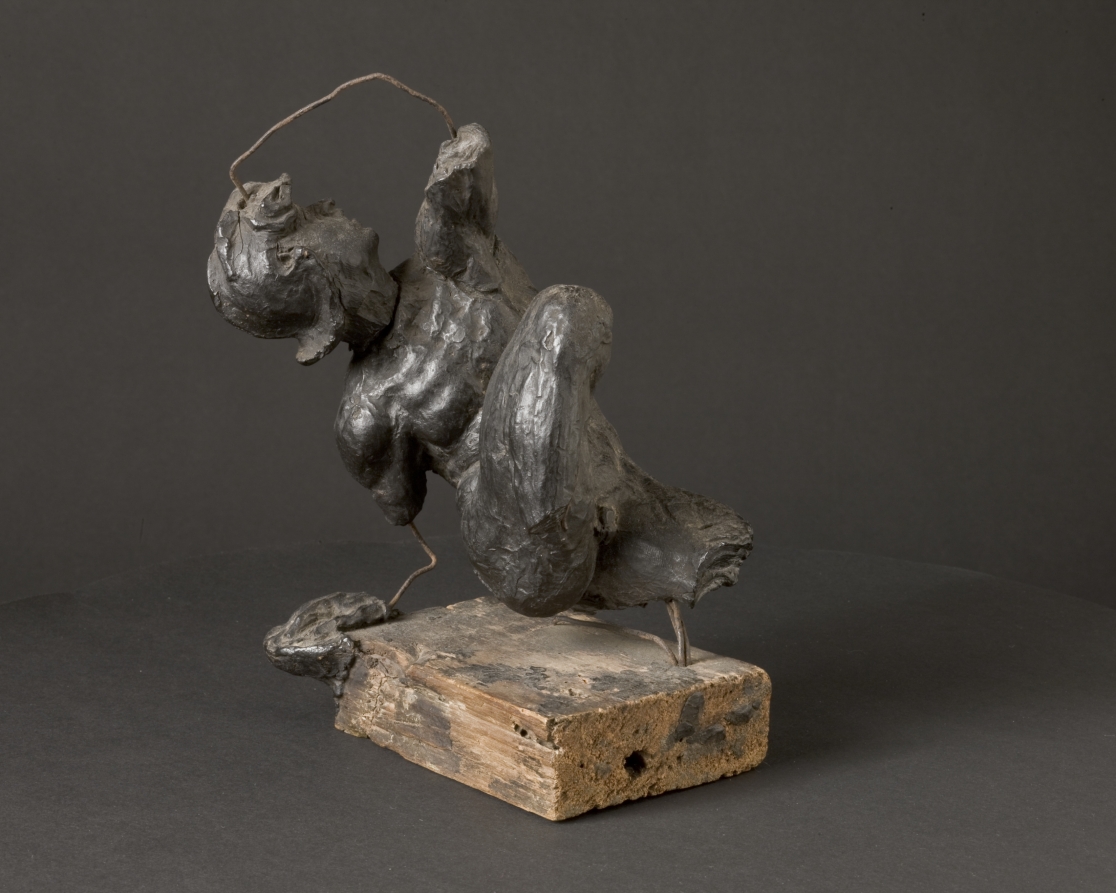
The museum identifies this sculpture as wax on a metal armature, mounted on wood and credits Giovanni Francesco Rustici (Italian, 1474–1554).
The museum's collection notes: Giorgio Vasari (1511–1574), an influential writer and painter, notes in his biography of his contemporary Rustici, that the artist sculpted terracotta battle scenes of groups of horses "with men on their backs or under them." This wax model may be a study for such a group, showing a contorted, helmeted warrior bracing himself after falling to the ground. The figures for these projects were most likely inspired by those in Leonardo's monumental wall painting depicting the Battle of Anghiari for the Hall of the Five Hundred in the Palazzo Vecchio, Florence. Although the fresco was never completed, its pictorial scheme was well known. Rustici la