YOUR NEXT DISCOVERY/ArtifactsFollow your curiosity
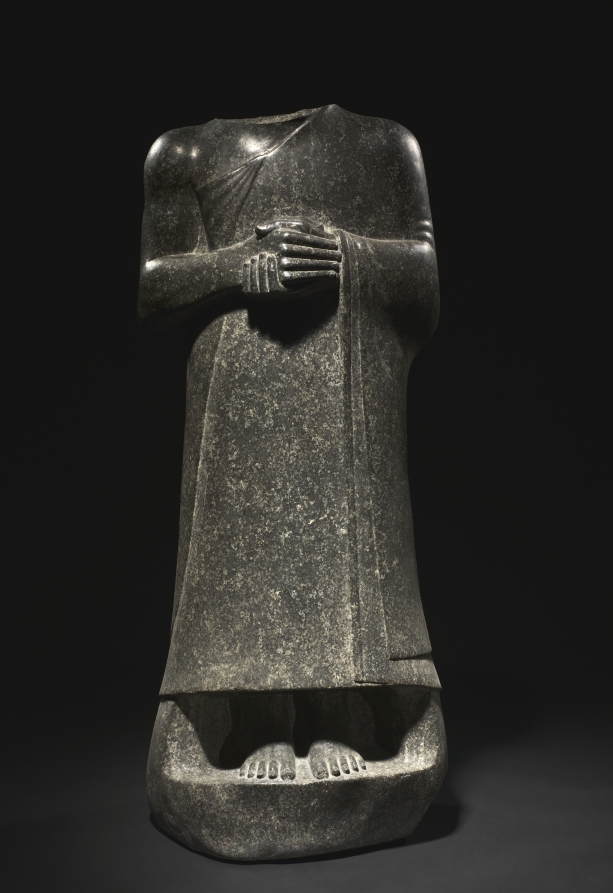
Statue of Gudea, from The Cleveland Museum of Art
The Cleveland Museum of Art · Open Access · Reuse terms

Mesopotamia, Neo-Sumerian, Iraq, Girsu / c. 2144–2124 BCE

Statue of Gudea

Statue of Gudea

The Cleveland Museum of Art catalogs Statue of Gudea as sculpture (Mesopotamia, Neo-Sumerian, Iraq, Girsu · c. 2144–2124 BCE).

Twice in the 20th century, this headless figure was wrongly "completed" with the head 1963.680, which comes from a similar sculpture.

SERENDIPITYA little unexpected
FamiliarWeird

The museum identifies this sculpture as dolerite.

The museum's collection notes: This headless figure’s clasped hands create a distinctive gesture that recurs frequently on more than 30 recorded statues of the Mesopotamian ruler Gudea. Between c. 2144–2124 BCE, Gudea ruled as ensi (governor) of the city-state of Lagash, located in modern-day Iraq. Scholars have identified more than 2,400 inscriptions that describe his reign, which included patronage of the arts and an extensive building program. Statues like this one would have been placed in temples as stand-ins for Gudea himself, demonstrating his devotion and piety.

The Cleveland Museum of ArtStatue of Gudea

Original explanation based on the sources above. Images carry their own reuse terms.