YOUR NEXT DISCOVERY/ArtifactsFollow your curiosity
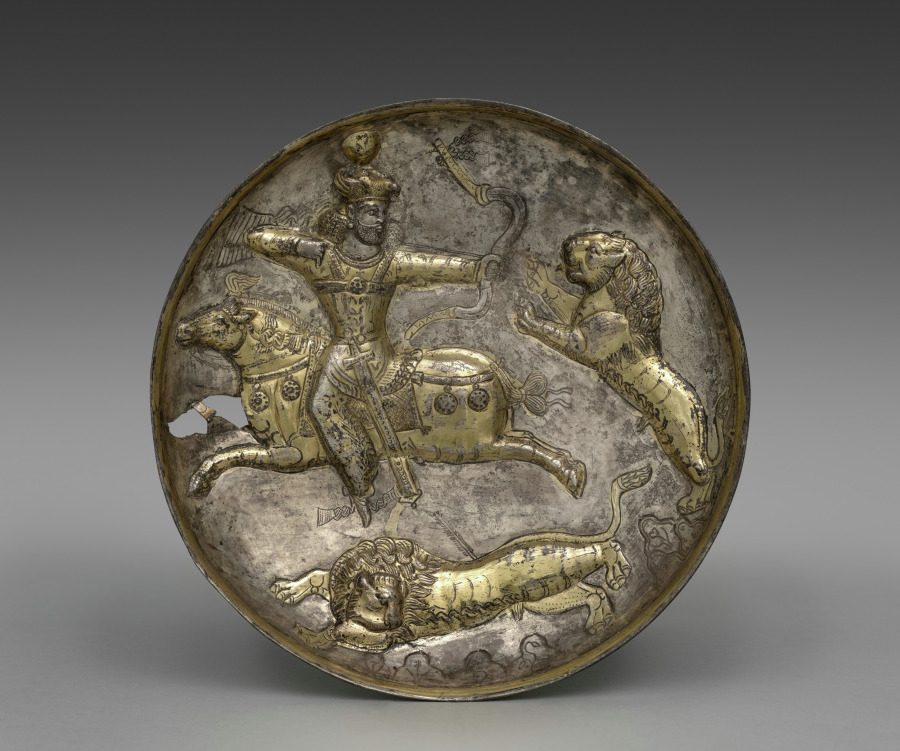
Dish with King Hormizd II or Hormizd III Hunting Lions, from The Cleveland Museum of Art
The Cleveland Museum of Art · Open Access · Reuse terms

Iran, Sasanian Empire (224–651 CE) / 400–600 CE

Dish with King Hormizd II or Hormizd III Hunting Lions

Dish with King Hormizd II or Hormizd III Hunting Lions

The Cleveland Museum of Art catalogs Dish with King Hormizd II or Hormizd III Hunting Lions as metalwork (Iran, Sasanian Empire (224–651 CE) · 400–600 CE).

Hormizd II's crown is distinct with its eagle form and topped with the traditional korymbos , a fine, bejeweled fabric that encases the top hair in a globelike fashion.

SERENDIPITYA little unexpected
FamiliarWeird

The museum identifies this metalwork as silver gilt.

The museum's collection notes: Lion hunting was a traditional royal sport in ancient Near Eastern cultures and was frequently incorporated into artwork, such as Assyrian (about 912–612 BCE) palace reliefs. Thematically, depictions of the hunt in royal artwork bridge the pre- and post-Islamic worlds. This dish features the Sasanian ruler Hormizd II (reigned 303–309 CE), identifiable by his distinctive crown. The style of the king’s and horse’s equipment suggest that this dish was made long after he died, perhaps as a commemorative work by a much later successor, Hormizd III (reigned 457–459 CE).

The Cleveland Museum of ArtDish with King Hormizd II or Hormizd III Hunting Lions

Original explanation based on the sources above. Images carry their own reuse terms.