YOUR NEXT DISCOVERY/ArtifactsFollow your curiosity
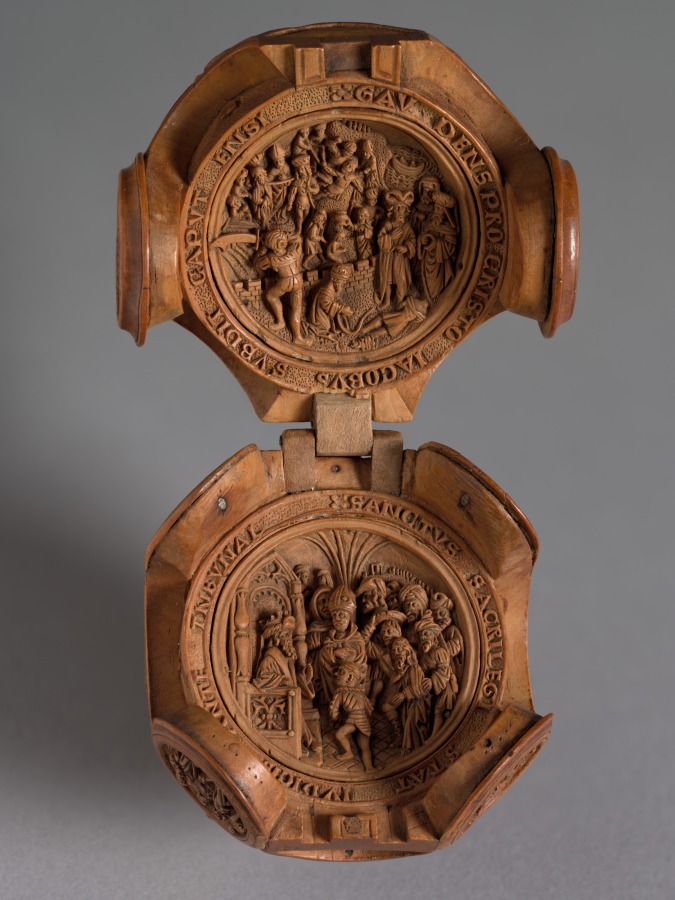
Prayer Nut with Scenes from the Life of St. James the Greater, from The Cleveland Museum of Art
The Cleveland Museum of Art · Open Access · Reuse terms

Northern Netherlands (Holland) / c. 1500–1530

Prayer Nut with Scenes from the Life of St. James the Greater

Prayer Nut with Scenes from the Life of St. James the Greater

The Cleveland Museum of Art catalogs Prayer Nut with Scenes from the Life of St. James the Greater as sculpture (Northern Netherlands (Holland) · c. 1500–1530).

This miniature masterpiece was held and caressed within the palm of the holder as they prayed and meditated on their faith. What do you use to focus or engage in quiet concentration?

SERENDIPITYA little unexpected
FamiliarWeird

The museum identifies this sculpture as boxwood and credits Adam Dircksz (Netherlandish, active c. 1500).

The museum's collection notes: Prayer nuts are capsules that can be opened in half and were mainly worn from the end of the 1400s until 1530, particularly in the Netherlands. These objects are generally made from boxwood and carved with extreme refinement and delicacy. They often echo Gothic architecture and include openwork tracery or elaborate decorative patterns. Prayer nuts came into fashion for private devotion as a pendant on the rosary or on a decorative chain. The emergence of prayer nuts went hand in hand with the practice of praying the rosary more frequently at the end of the Middle Ages.

The Cleveland Museum of ArtPrayer Nut with Scenes from the Life of St. James the Greater

Original explanation based on the sources above. Images carry their own reuse terms.