YOUR NEXT DISCOVERY/ArtifactsFollow your curiosity
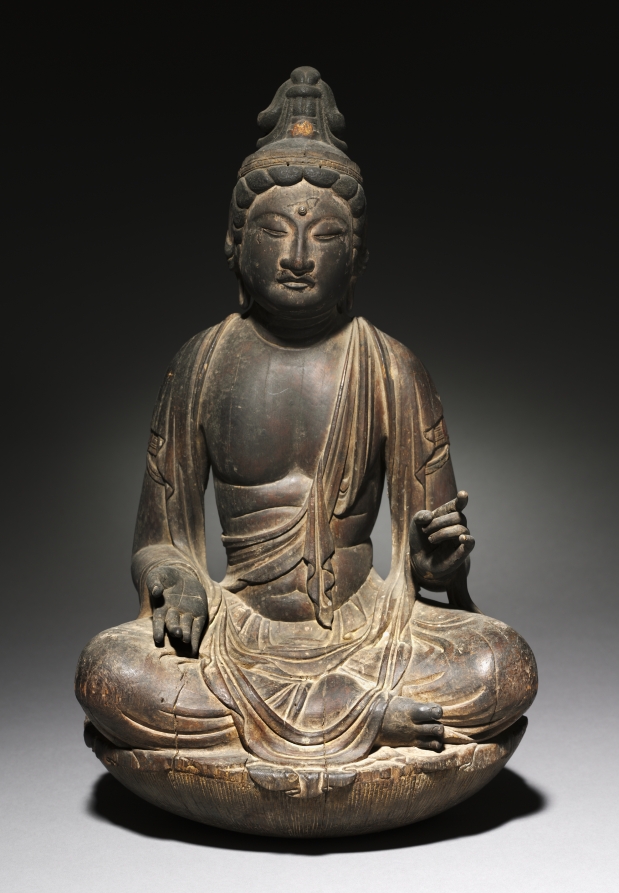
Sun Bodhisattva (Nikkō Bosatsu), from The Cleveland Museum of Art
The Cleveland Museum of Art · Open Access · Reuse terms

Japan, Heian period (794–1185) / c. 800

Sun Bodhisattva (Nikkō Bosatsu)

Sun Bodhisattva (Nikkō Bosatsu)

The Cleveland Museum of Art catalogs Sun Bodhisattva (Nikkō Bosatsu) as sculpture (Japan, Heian period (794–1185) · c. 800).

Japanese nutmeg-yew, or kaya , was used as a replacement for the unobtainable sandalwood of which small Buddhist sculptures imported from China were made.

SERENDIPITYA little unexpected
FamiliarWeird

The museum identifies this sculpture as Japanese nutmeg-yew wood with traces of color and gold.

The museum's collection notes: Bodhisattvas are beings who have attained enlightenment but delay entry into Buddhahood until they have fulfilled their varied vows to aid others along the path to enlightenment. The flowing robes and curving posture of this figure were inspired by Chinese Buddhist sculpture. However, the interplay of the wood grain in this single block of yew with the artist’s subtle carving is a Japanese innovation. Originally paired with the Moon Bodhisattva (Gekkō Bosatsu), this figure likely flanked a sculpture of the Medicine Master Buddha (Yakushi Nyorai).

The Cleveland Museum of ArtSun Bodhisattva (Nikkō Bosatsu)

Original explanation based on the sources above. Images carry their own reuse terms.