YOUR NEXT DISCOVERY/ArtifactsFollow your curiosity
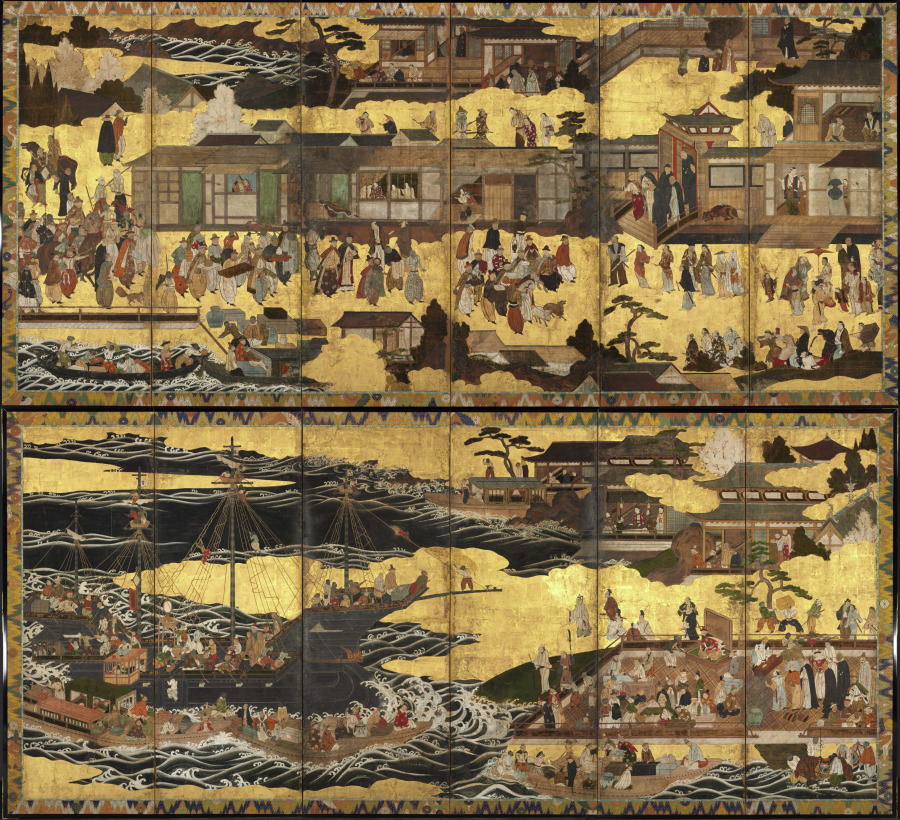
Arrival of the "Southern Barbarians", from The Cleveland Museum of Art
The Cleveland Museum of Art · Open Access · Reuse terms

Japan, Momoyama period (1573–1615) / c. 1600

Arrival of the "Southern Barbarians"

Arrival of the "Southern Barbarians"

The Cleveland Museum of Art catalogs Arrival of the "Southern Barbarians" as painting (Japan, Momoyama period (1573–1615) · c. 1600).

Europeans were called "Southern Barbarians" because their ships arrived in Japan from the south.

SERENDIPITYA little unexpected
FamiliarWeird

The museum identifies this painting as Pair of six-panel folding screens; ink, color, and gold on paper.

The museum's collection notes: These screens show European merchants arriving in Japan. Almost certainly the persons represented are Portuguese, since they are accompanied by Roman Catholic priests. Early in the 1600s the Portuguese were forced out of Japan, chiefly because of internal difficulties caused by their missionaries. Later, between 1641 and 1853, the Dutch were the only Europeans permitted to trade with Japan but their presence was restricted to a port town in far western Japan, near present-day Nagasaki.

The Cleveland Museum of ArtArrival of the "Southern Barbarians"

Original explanation based on the sources above. Images carry their own reuse terms.