YOUR NEXT DISCOVERY/ArtifactsFollow your curiosity
Time (from Chateau de Chaumont set), from The Cleveland Museum of Art
The Cleveland Museum of Art · Open Access · Reuse terms

France, Lyon(?), early 16th century / 1512–15

Time (from Chateau de Chaumont set)

Time (from Chateau de Chaumont set)

The Cleveland Museum of Art catalogs Time (from Chateau de Chaumont set) as tapestry (France, Lyon(?), early 16th century · 1512–15).

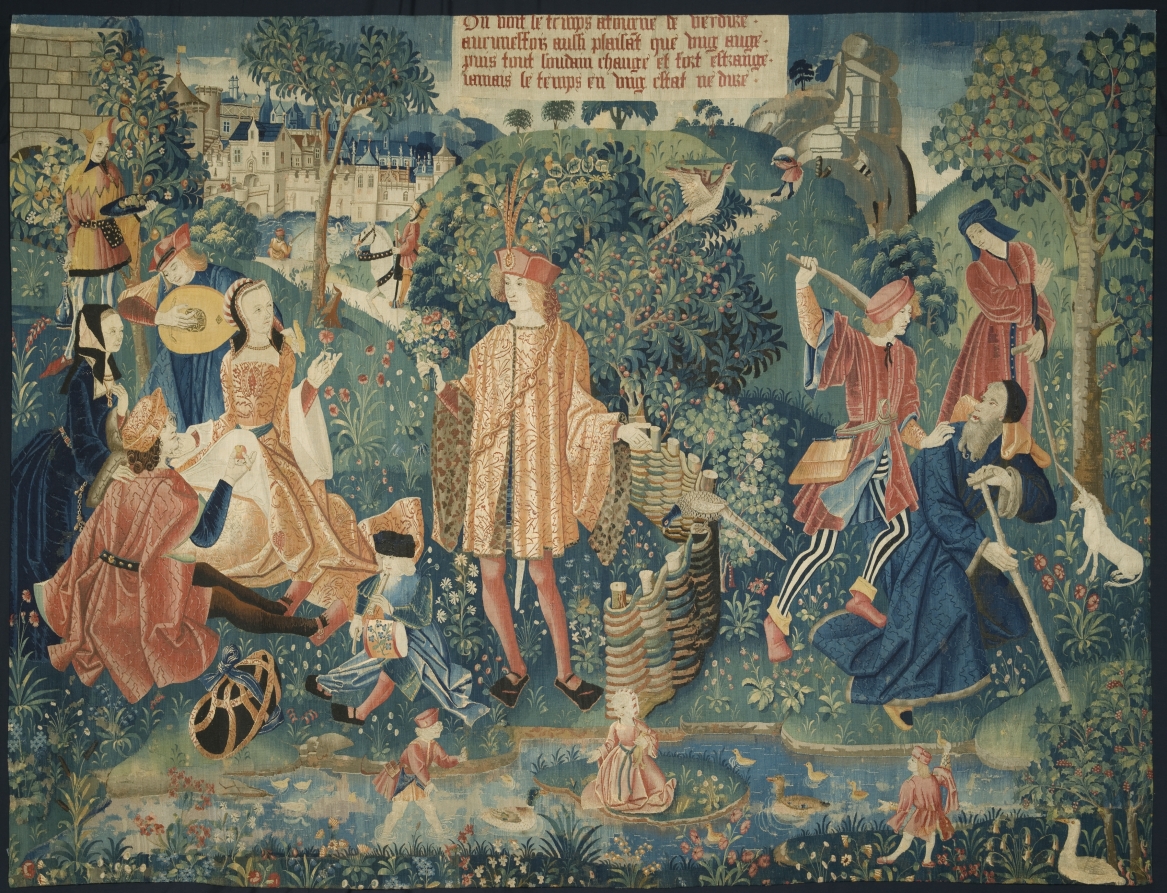
Pierre Sala, who likely commissioned the set, is portrayed as the richly attired central figure offering a bouquet, a symbol of knowledge, to Éléonore, his daughter. Éléonore is pregnant, revealed by her upturned skirt and the persimmon in her husband Hector’s hand.

SERENDIPITYA little unexpected
FamiliarWeird

The museum identifies this tapestry as silk and wool; tapestry weave.

The museum's collection notes: Pierre Sala, who likely commissioned the set, is portrayed as the richly attired central figure offering a bouquet, a symbol of knowledge, to Éléonore, his daughter. Éléonore is pregnant, revealed by her upturned skirt and the persimmon in her husband Hector’s hand. Hector’s mother, Marguerite, in dark attire, will wed the widowed Sala in 1519. They appear in front of the royal chateau of Blois. The figures at the right convey Sala’s advice to his children. Time (the old man with the staff) with Clio, the Muse of History, standing on his shoulders, is being attacked by a Herculean youth wielding a stick. With this allegory, Sala is explaining

The Cleveland Museum of ArtTime (from Chateau de Chaumont set)

Original explanation based on the sources above. Images carry their own reuse terms.