YOUR NEXT DISCOVERY/ArtifactsFollow your curiosity
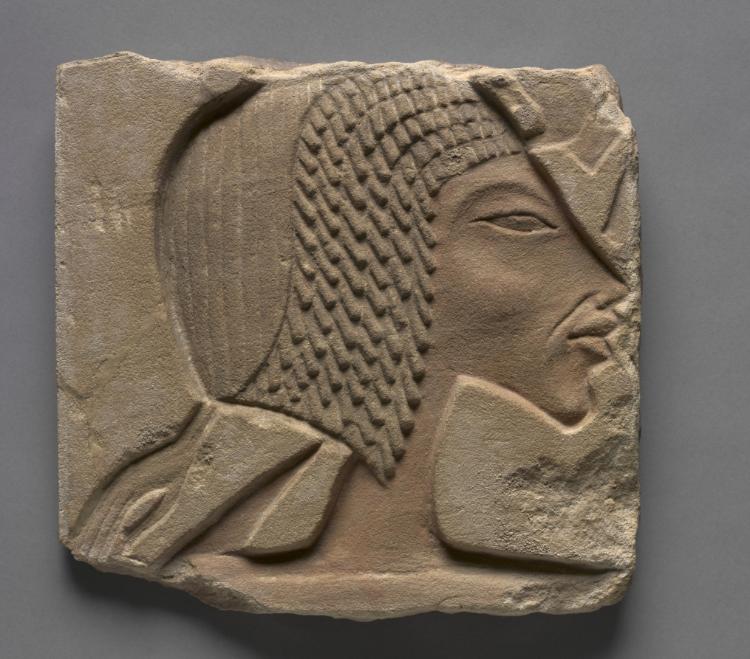
Talatat: Portrait of Nefertiti, from The Cleveland Museum of Art
The Cleveland Museum of Art · Open Access · Reuse terms

Egypt, Karnak, New Kingdom (1540–1069 BCE), Dynasty 18, reign of Akhenaten (1351–1334 BCE) / c. 1353–1347 BCE

Talatat: Portrait of Nefertiti

Talatat: Portrait of Nefertiti

The Cleveland Museum of Art catalogs Talatat: Portrait of Nefertiti as sculpture (Egypt, Karnak, New Kingdom (1540–1069 BCE), Dynasty 18, reign of Akhenaten (1351–1334 BCE) · c. 1353–1347 BCE).

This relief comes from the short end of a talatat, a limestone block of standardized size used during the 18th Dynasty reign of the Pharaoh Akhenaten in the building of the Aton temples at Karnak and Akhetaten. The standardized size and their small weight made construction more efficient.

SERENDIPITYA little unexpected
FamiliarWeird

The museum identifies this sculpture as painted sandstone.

The museum's collection notes: The son of Amenhotep III, Akenhaten, brought about the short-lived "monotheistic" revolution in Egyptian religion near the end of Dynasty 18. The young king constructed a temple complex to the Aten, the Sun Disk, at Karnak—from which this relief comes—before he moved his capital to El Amarna. For reasons yet unknown, the figure of the Queen Nefertiti appears in these reliefs far more often that that of the king. Ironically, the Aten temples were dismantled to be used as foundations and fill for additions to the Great Temple of Amun, whom the Aten had briefly displaced.

The Cleveland Museum of ArtTalatat: Portrait of Nefertiti

Original explanation based on the sources above. Images carry their own reuse terms.