A CLOSER LOOK
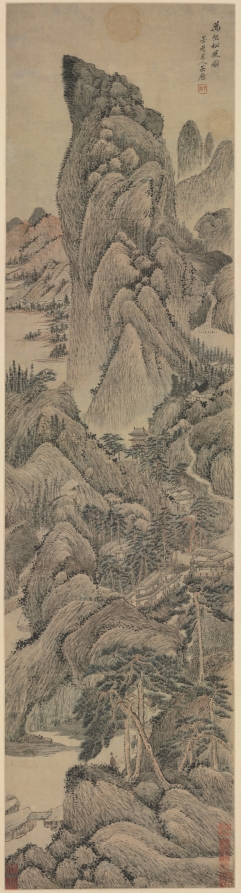
The museum identifies this painting as Hanging scroll; ink and light color on paper and credits Wu Li (Chinese, 1632–1718).
The museum's collection notes: Wu Li, a native of Jiangsu province, was a talented painter, poet, and calligrapher. He studied painting with Wang Jian (1598–1677) and Wang Shimin (1592–1680), two of the “Four Wangs,” leaders of the Orthodox school of painting in the early Qing period. Through them, he also absorbed styles of earlier Ming dynasty masters. Wu was highly praised by his contemporaries and his paintings were in demand, but his interest in philosophy and religion curtailed his painting activities later in life. Wu Li converted to Christianity and in 1688 was ordained as one of the first 3 Chinese Jesuit priests. He spent the final 30 years of his life primarily