YOUR NEXT DISCOVERY/ArtifactsFollow your curiosity
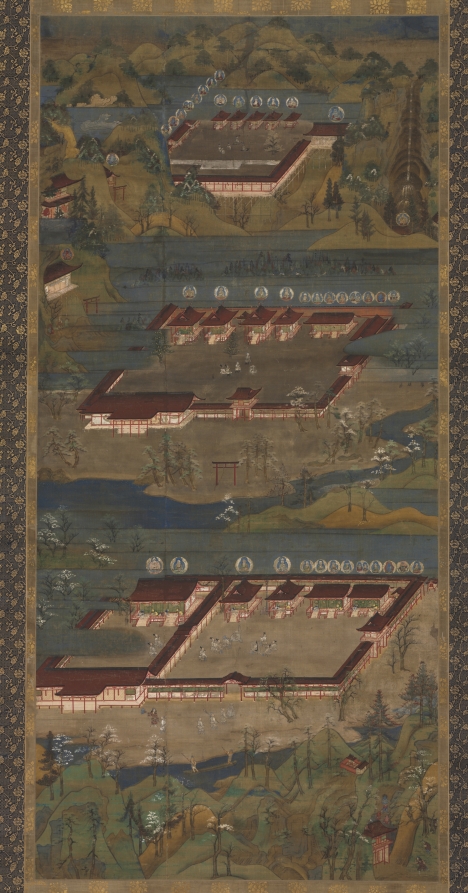
Mandala of the Three Shrines at Kumano, from The Cleveland Museum of Art
The Cleveland Museum of Art · Open Access · Reuse terms

Japan, Kamakura period (1185–1333) to Nanbokuchō period (1336–92) / 1300s

Mandala of the Three Shrines at Kumano

Mandala of the Three Shrines at Kumano

The Cleveland Museum of Art catalogs Mandala of the Three Shrines at Kumano as painting (Japan, Kamakura period (1185–1333) to Nanbokuchō period (1336–92) · 1300s).

The sacred waterfall at the top right of the painting is called Nachi.

SERENDIPITYA little unexpected
FamiliarWeird

The museum identifies this painting as hanging scroll; ink and color on silk.

The museum's collection notes: This painting depicts the three shrines of Kumano from a bird’s-eye perspective, with the Buddhist counterparts of the kami of each shrine hall shown in discs directly above the halls. It also features figures, both pilgrims and deities, along the pilgrimage route and at the shrines. It is the only surviving work illustrating architectural representations of all three shrines in the same painting. They are compressed into a stacked composition, with the Nachi shrine at the top, the Shingū in the middle, and the Hongū at the bottom.

The Cleveland Museum of ArtMandala of the Three Shrines at Kumano

Original explanation based on the sources above. Images carry their own reuse terms.