YOUR NEXT DISCOVERY/ArtifactsFollow your curiosity
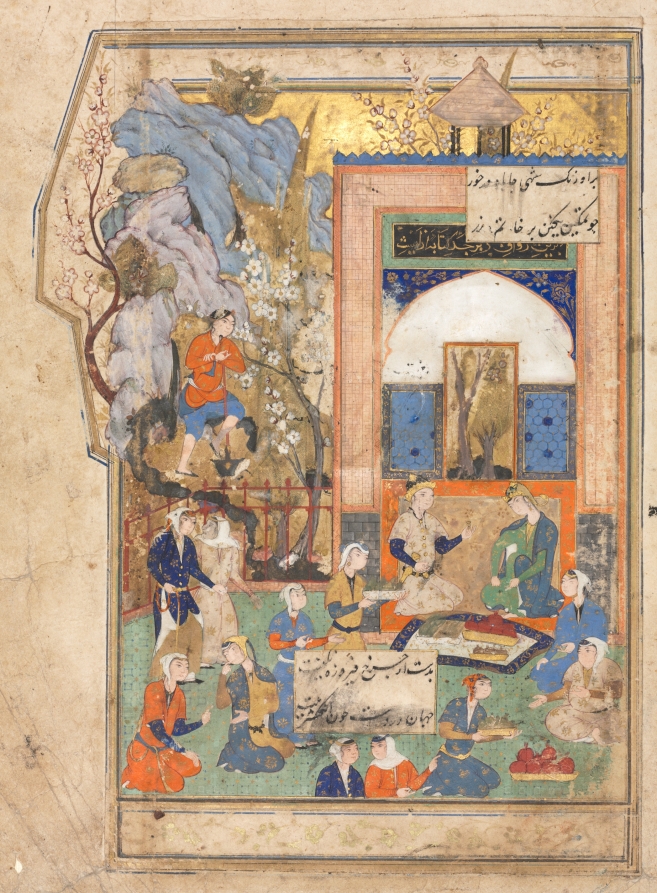
Yusuf and Zulaykha (recto), from an Anthology of Persian Verses, including the Haft Awrang (Seven Thrones) of Jami: The , from The Cleveland Museum of Art
The Cleveland Museum of Art · Open Access · Reuse terms

Iran, Shiraz or Mashhad, Safavid period (1501–1722) / c. 1556–65

Yusuf and Zulaykha (recto), from an Anthology of Persian Verses, including the Haft Awrang (Seven Thrones) of Jami: The

Yusuf and Zulaykha (recto), from an Anthology of Persian Verses, including the Haft Awrang (Seven Thrones) of Jami: The

The Cleveland Museum of Art catalogs Yusuf and Zulaykha (recto), from an Anthology of Persian Verses, including the Haft Awrang (Seven Thrones) of Jami: The as manuscript (Iran, Shiraz or Mashhad, Safavid period (1501–1722) · c. 1556–65).

Figs and pomegranates, being served to the couple, are symbolic of fertility.

SERENDIPITYA little unexpected
FamiliarWeird

The museum identifies this manuscript as Gum tempera, ink, and gold on paper.

The museum's collection notes: The painting quotes verses from the Haft Awrang (Seven Thrones) by the Persian poet Jami, a classic of Persian literature, here illustrating the romance of Yusuf and Zulaykha. Originally rooted in the Qur’an (Surah Yusuf, chapter 12), the Prophet Yusuf (Joseph) encounters the wife of the Egyptian governor, traditionally identified as Zulaykha, both seated opposite each other on the right, framed by architecture.

The Cleveland Museum of ArtYusuf and Zulaykha (recto), from an Anthology of Persian Verses, including the Haft Awrang (Seven Thrones) of Jami: The

Original explanation based on the sources above. Images carry their own reuse terms.