YOUR NEXT DISCOVERY/ArtifactsFollow your curiosity
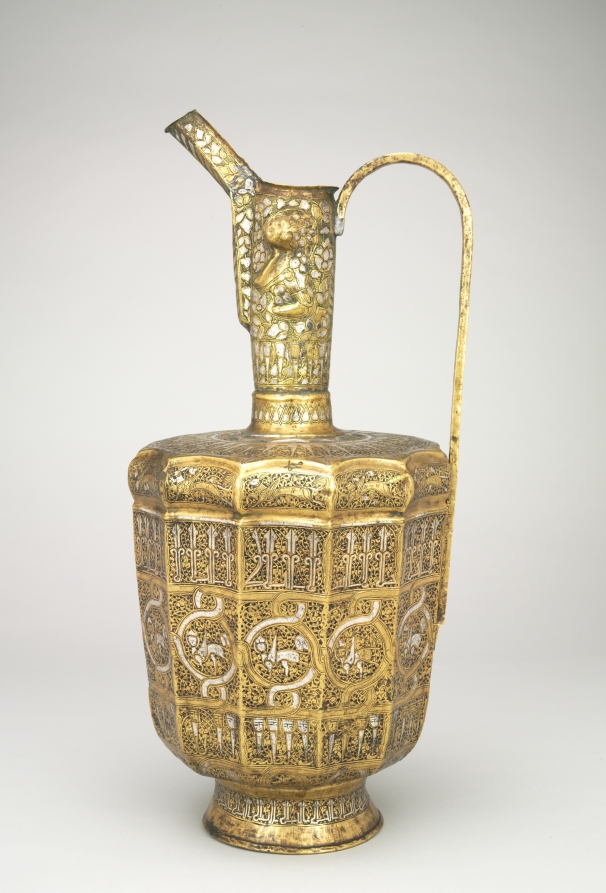
Twelve-sided Ewer with Sphinxes and Human-Headed Inscriptions, from The Cleveland Museum of Art
The Cleveland Museum of Art · Open Access · Reuse terms

Iran, Khurasan, Ilkhanid period (1256–1353) / 1300–1350

Twelve-sided Ewer with Sphinxes and Human-Headed Inscriptions

Twelve-sided Ewer with Sphinxes and Human-Headed Inscriptions

The Cleveland Museum of Art catalogs Twelve-sided Ewer with Sphinxes and Human-Headed Inscriptions as metalwork (Iran, Khurasan, Ilkhanid period (1256–1353) · 1300–1350).

Calligraphy with human heads, known as animated script, developed in northeast Iran during the 1100s.

SERENDIPITYA little unexpected
FamiliarWeird

The museum identifies this metalwork as hammered sheet of brass inlaid with silver.

The museum's collection notes: The spout and neck of the ewer display a crouching and seated lion in raised relief. Winged hare-like animals march around the top of the body, set off by foliate scrolls, while sphinxes process around the center. The bottom of the ewer’s body is encircled by an inscription with human heads, which only appear on metalwork in Islamic art. Ewers like this, and similar elaborate vessels, would have been used in court banquets and elite homes across the Islamic world.

The Cleveland Museum of ArtTwelve-sided Ewer with Sphinxes and Human-Headed Inscriptions

Original explanation based on the sources above. Images carry their own reuse terms.