A CLOSER LOOK
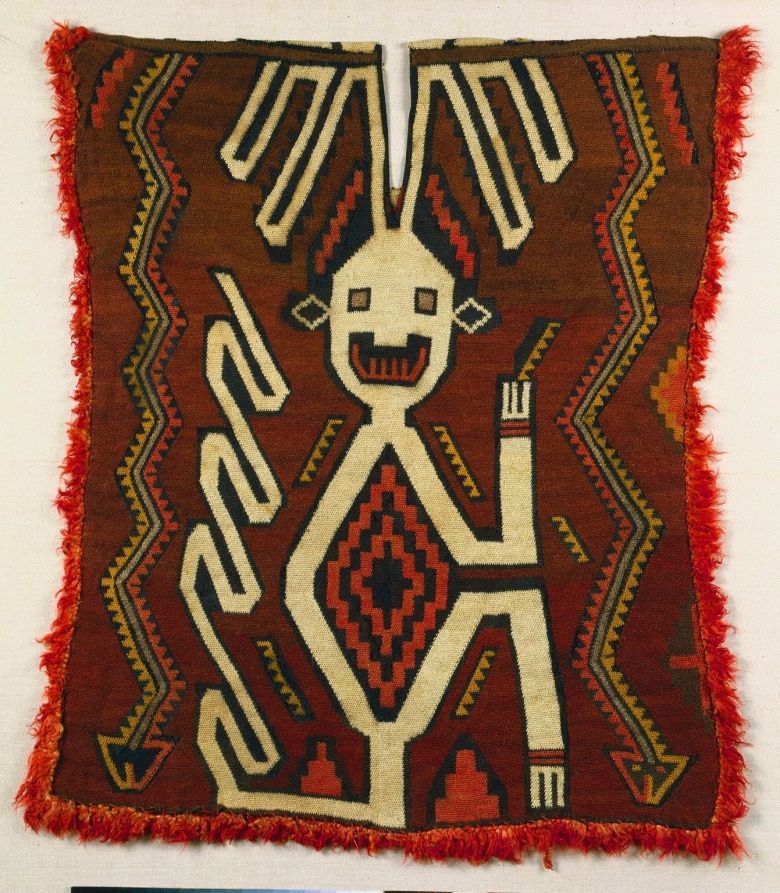
The museum identifies this textile as looped camelid fiber.
The museum's collection notes: The striking, large-scale figure shown on this tunic has an elaborate, monkey-like tail as well as head appendages that mark the creature as supernatural. This tunic, a relatively rare type, was made not on a loom but rather by working the yarns into loops with a needle. It is made entirely with camelid fiber, which can readily be dyed in a range of vivid colors. The fiber comes from one of the four camels (camelids) native to the Andes Mountains—the alpaca and llama, both domesticated, and the wild guanaco and vicuña. On the coast, it represents a prestige import.