YOUR NEXT DISCOVERY/ArtifactsFollow your curiosity
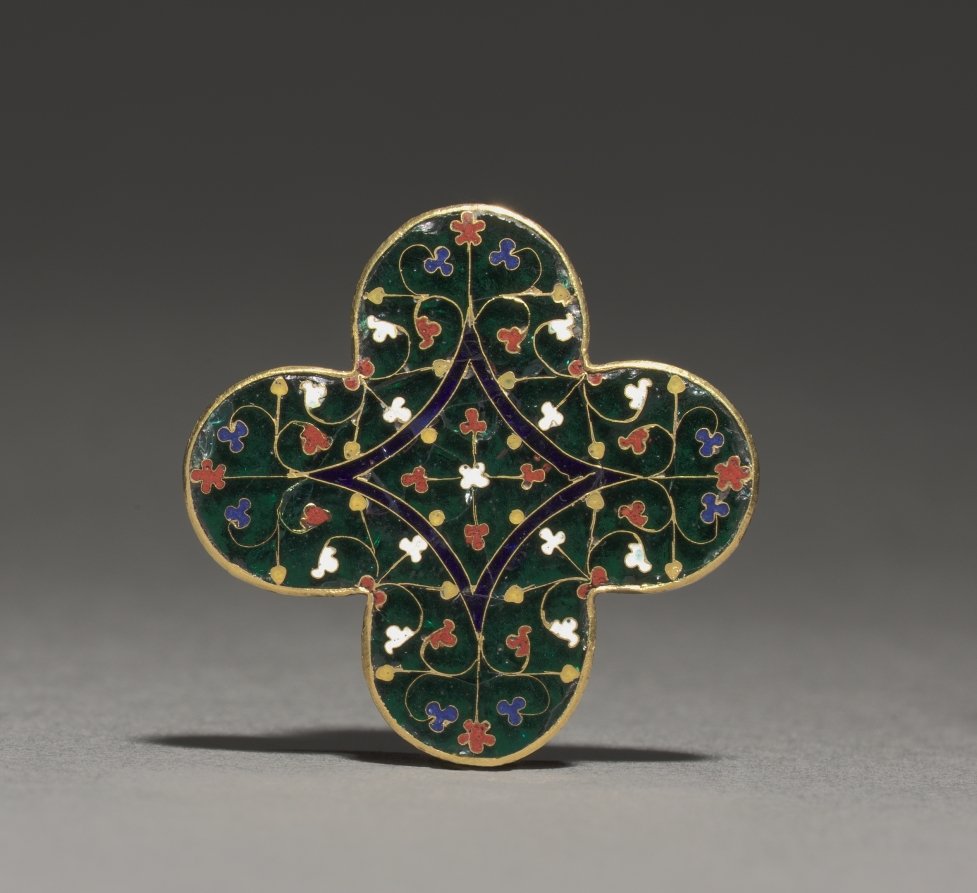
Quatrilobed Plaque, from The Cleveland Museum of Art
The Cleveland Museum of Art · Open Access · Reuse terms

France, Paris, Ile-de-France, Gothic period, early 14th century / c. 1280–1300

Quatrilobed Plaque

Quatrilobed Plaque

The Cleveland Museum of Art catalogs Quatrilobed Plaque as metalwork (France, Paris, Ile-de-France, Gothic period, early 14th century · c. 1280–1300).

Julien was not the only artisan to produce émaux de plique ; therefore, an exact attribution to an artist is problematic.

SERENDIPITYA little unexpected
FamiliarWeird

The museum identifies this metalwork as Gold, translucent enamel.

The museum's collection notes: This rare four-lobed plaque is a superb example of émail de plique , a virtuoso enameling method popular in Paris during the late 1200s with the court of Philip the Fair (reigned 1285–1314). Plaques like this were prepared in advance to be attached to larger works including crosses, chalices, reliquaries, or even sewn into precious fabrics for decoration. Given the very distinctive shape of this plaque it is certain to have been created for a specific commission.

The Cleveland Museum of ArtQuatrilobed Plaque

Original explanation based on the sources above. Images carry their own reuse terms.