YOUR NEXT DISCOVERY/ArtifactsFollow your curiosity
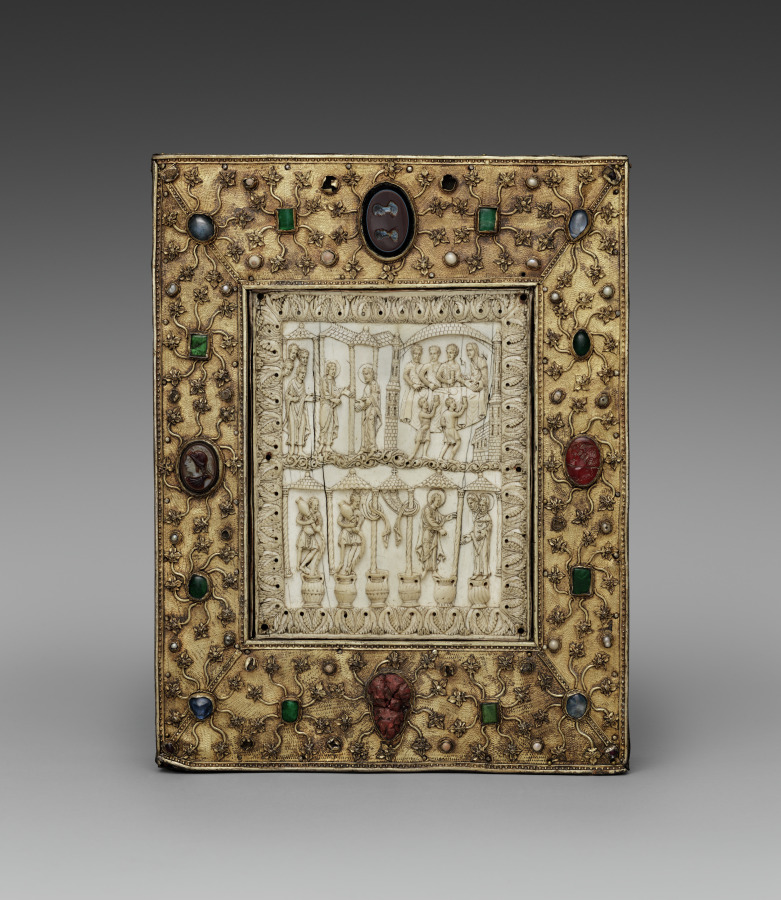
Book-Shaped Reliquary, from The Cleveland Museum of Art
The Cleveland Museum of Art · Open Access · Reuse terms

Ivory: Ottonian, Lorrain; Frame: Germany, Lower Saxony, Brunswick, Gothic period, 14th century / c. 1000

Book-Shaped Reliquary

Book-Shaped Reliquary

The Cleveland Museum of Art catalogs Book-Shaped Reliquary as metalwork (Ivory: Ottonian, Lorrain; Frame: Germany, Lower Saxony, Brunswick, Gothic period, 14th century · c. 1000).

This sumptuous object closely resembles a deluxe medieval book cover in both form and decoration. It was likely commissioned by Otto the Mild, Duke of Saxony (reigned 1318–48) around 1340.

SERENDIPITYA little unexpected
FamiliarWeird

The museum identifies this metalwork as ivory, silver: gilded, pearls, rubies, emeralds, crystals, onyx, carnelian, oak and credits The Master of the Registrum Gregorii (German, active c. 972–1000).

The museum's collection notes: This sumptuous object closely resembles a deluxe medieval book cover in both form and decoration. It was likely commissioned by Otto the Mild, Duke of Saxony (reigned 1318–48) around 1340. It was made to contain a leaf from each gospel and relics of the 11,000 virgins and 4 other saints. These relics were originally kept in a cavity behind the delicately carved ivory plaque depicting scenes from the Wedding at Cana (John 2:1–11). The story of Christ's first miracle is presented in three scenes. In the upper left, the Virgin informs Christ and his apostles of the lack of wine at the wedding banquet. On the right, the groom, his bride, and thei

The Cleveland Museum of ArtBook-Shaped Reliquary

Original explanation based on the sources above. Images carry their own reuse terms.