YOUR NEXT DISCOVERY/ArtifactsFollow your curiosity
The Race Track (Death on a Pale Horse), from The Cleveland Museum of Art
The Cleveland Museum of Art · Open Access · Reuse terms

America / c. 1896–1908

The Race Track (Death on a Pale Horse)

The Race Track (Death on a Pale Horse)

The Cleveland Museum of Art catalogs The Race Track (Death on a Pale Horse) as painting (America · c. 1896–1908).

Counterclockwise horse racing in the United States was not standardized until the 1920s.

SERENDIPITYA little unexpected
FamiliarWeird

The museum identifies this painting as oil on canvas and credits Albert Pinkham Ryder (American, 1847–1917).

The museum's collection notes: Ryder’s subject was inspired by a horse race that took place in New York during 1888. One of the artist’s friends wagered $500 on the race and then died by suicide after the horse lost. Medieval symbolism infuses the composition: death appears as a skeleton on horseback holding a scythe with which it cuts down the living, while a snake—a sign of temptation and evil—slithers in the foreground. An intense man, Ryder worked on the painting for several years and was deeply reluctant to part with it.
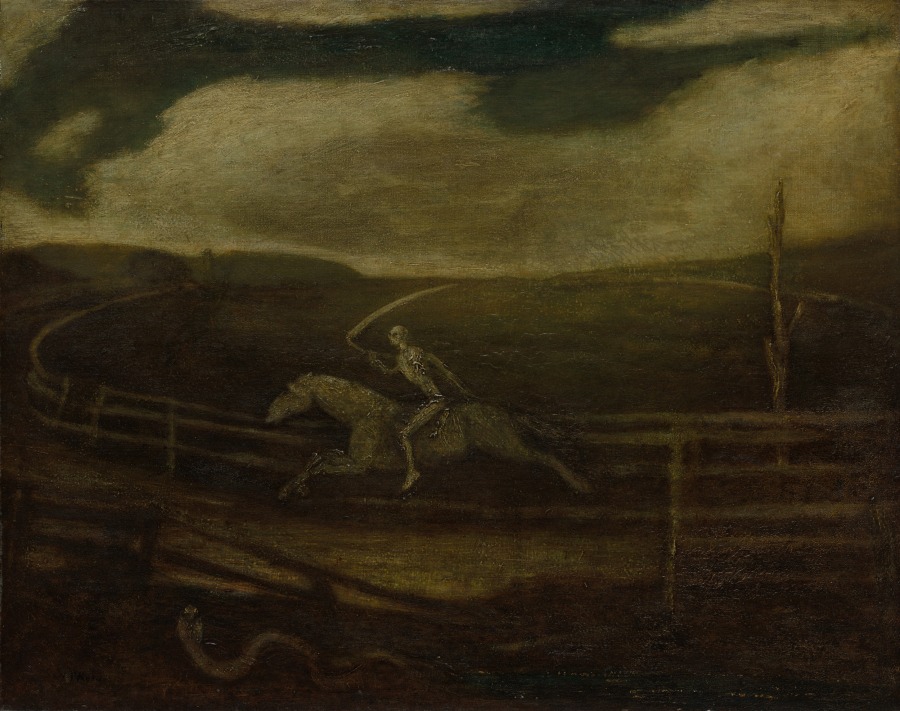
The Cleveland Museum of ArtThe Race Track (Death on a Pale Horse)

Original explanation based on the sources above. Images carry their own reuse terms.