YOUR NEXT DISCOVERY/ArtifactsFollow your curiosity
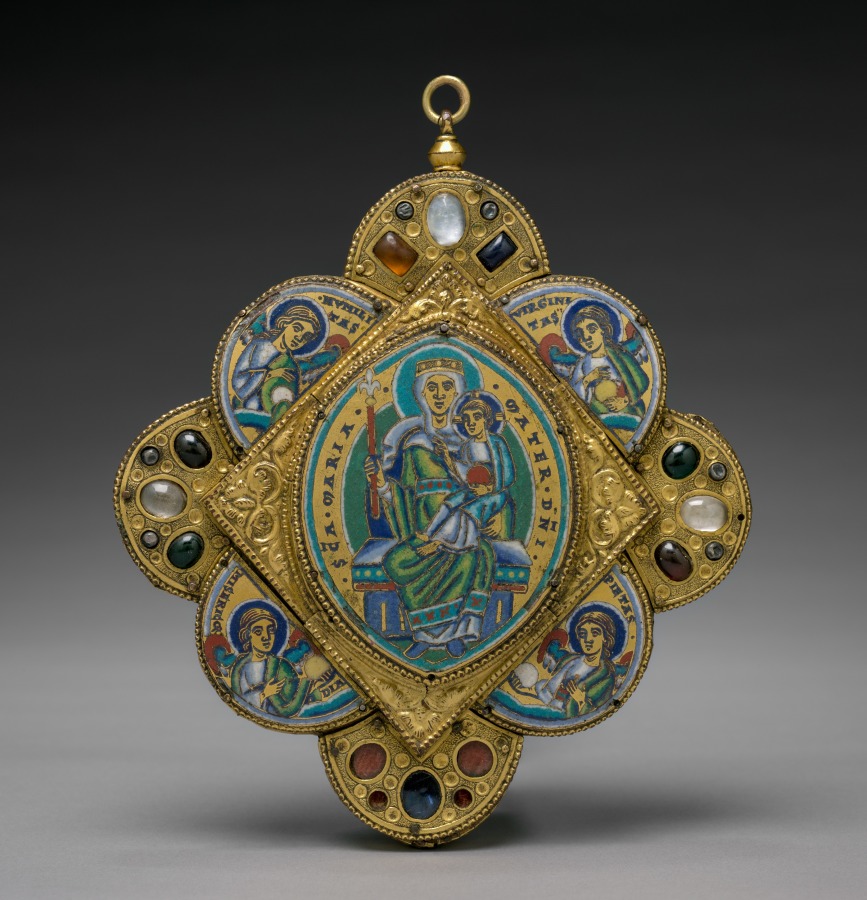
Pendant with the Virgin and Child, from The Cleveland Museum of Art
The Cleveland Museum of Art · Open Access · Reuse terms

Mosan, Meuse Valley, Romanesque period, 12th century / c. 1160–1170

Pendant with the Virgin and Child

Pendant with the Virgin and Child

The Cleveland Museum of Art catalogs Pendant with the Virgin and Child as enamel (Mosan, Meuse Valley, Romanesque period, 12th century · c. 1160–1170).

The outer lobes contain cabochons, gemstones that have been shaped and polished resulting in a rounded top and flat bottom, of garnet, glass, and quartz.

SERENDIPITYA little unexpected
FamiliarWeird

The museum identifies this enamel as gilded copper, champlevé enamel; the reverse decorated in vernis brun and credits Godefroid de Huy (Netherlandish).

The museum's collection notes: This pendant was made in the Rhine-Meuse region—now in modern Belgium—renowned for the production of fine metalwork objects, especially enamels. An enamel plaque depicting the enthroned Virgin and Christ child dominates the pendant. Four peripheral enamels depict angelic figures representing virtues: Humility, Virginity, Piety, and Mercy, each identified by an inscription. The pendant may have been made to serve as a reliquary to house a consecrated host. The refined craftsmanship and costly materials fittingly honor these sacred remains.

The Cleveland Museum of ArtPendant with the Virgin and Child

Original explanation based on the sources above. Images carry their own reuse terms.