YOUR NEXT DISCOVERY/ArtifactsFollow your curiosity
Processional Cross, from The Cleveland Museum of Art
The Cleveland Museum of Art · Open Access · Reuse terms

Italy, The Marches, 15th century / c. 1440–50

Processional Cross

Processional Cross

The Cleveland Museum of Art catalogs Processional Cross as metalwork (Italy, The Marches, 15th century · c. 1440–50).

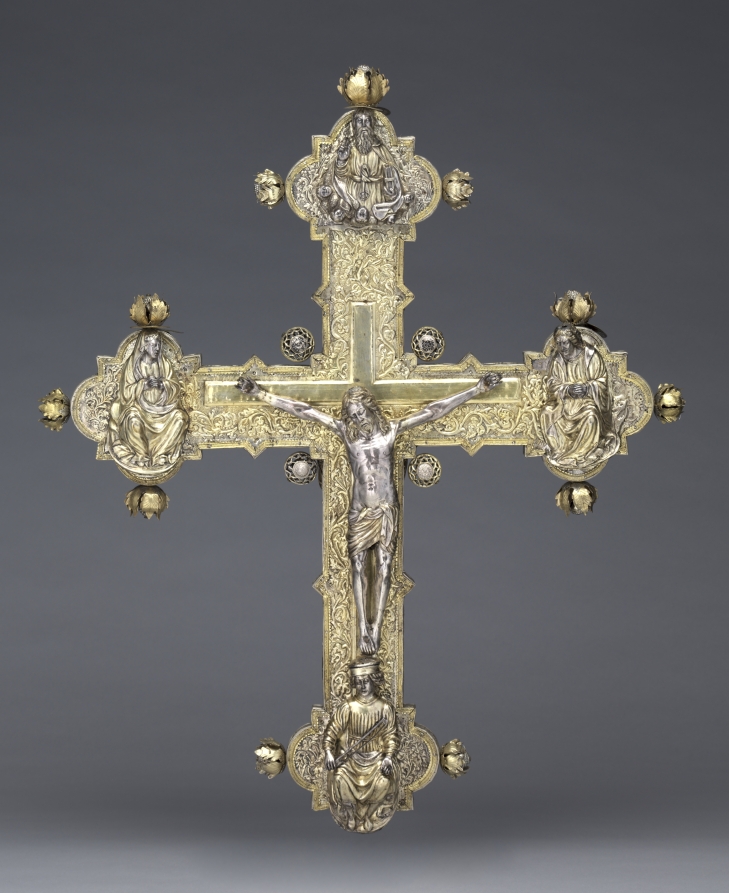
This remarkable object, meant to be carried in religious processions within a great church, is an example of the high level of skill achieved by 15th-century Italian silversmiths. The cross was made from hammered, chased, and gilded sheets of silver attached to a wooden core.

SERENDIPITYA little unexpected
FamiliarWeird

The museum identifies this metalwork as silver, gilt-silver, and repoussé, over wood and credits Pietro Vannini (Italian, 1413/14–1495/96).

The museum's collection notes: This remarkable object, meant to be carried in religious processions within a great church, is an example of the high level of skill achieved by 15th-century Italian silversmiths. The cross was made from hammered, chased, and gilded sheets of silver attached to a wooden core. The figures are made in repoussé, a technique of hammering the silver from beneath to create a design. On the front of the cross is the figure of Christ flanked by the seated Virgin and Saint John, with God the Father blessing from above. The back of the cross includes the figure of Christ in Majesty at the center, with the Evangelists at the end of each arm.

The Cleveland Museum of ArtProcessional Cross

Original explanation based on the sources above. Images carry their own reuse terms.