YOUR NEXT DISCOVERY/ArtifactsFollow your curiosity
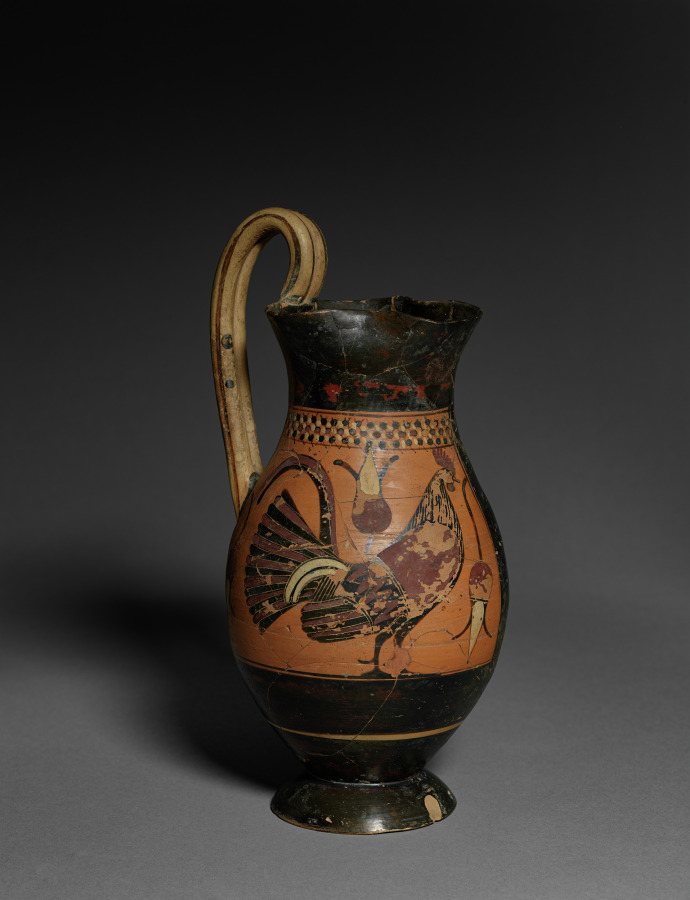
Black-Figure Olpe (Wine Jug): Rooster, from The Cleveland Museum of Art
The Cleveland Museum of Art · Open Access · Reuse terms

Greek, Middle/Late Corinthian / c. 575 BCE

Black-Figure Olpe (Wine Jug): Rooster

Black-Figure Olpe (Wine Jug): Rooster

The Cleveland Museum of Art catalogs Black-Figure Olpe (Wine Jug): Rooster as ceramic (Greek, Middle/Late Corinthian · c. 575 BCE).

Roosters appear frequently on vases—alone, in cock fights, and as love gifts.

SERENDIPITYA little unexpected
FamiliarWeird

The museum identifies this ceramic as ceramic.

The museum's collection notes: Although this wine jug, simply decorated with a rooster and two lotus blossoms, looks much like Athenian vases, it was made in Corinth. The paler buff color of the Corinthian clay can be seen on the handle and in some areas of loss, but the background of the decorated area has been covered with a red slip imitating the reddish, iron-rich Attic (or Athenian) clay. On the back of the vase, two reserved (red) crescent shapes may represent eyes, like those painted in much more detail on many drinking cups of this period.

The Cleveland Museum of ArtBlack-Figure Olpe (Wine Jug): Rooster

Original explanation based on the sources above. Images carry their own reuse terms.