YOUR NEXT DISCOVERY/ArtifactsFollow your curiosity
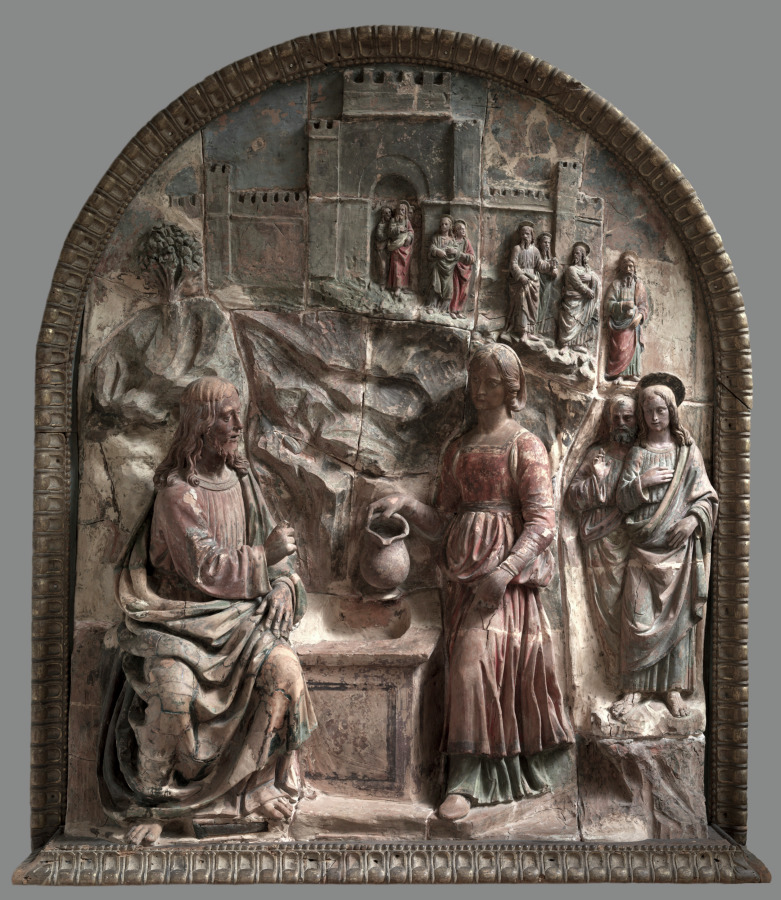
Christ and the Samaritan Woman at the Well, from The Cleveland Museum of Art
The Cleveland Museum of Art · Open Access · Reuse terms

Italy, Tuscany, Florence, 16th century / c. 1500–1530

Christ and the Samaritan Woman at the Well

Christ and the Samaritan Woman at the Well

The Cleveland Museum of Art catalogs Christ and the Samaritan Woman at the Well as sculpture (Italy, Tuscany, Florence, 16th century · c. 1500–1530).

The Samaritan woman’s bust was replaced by a reproduction before entering the museum’s collection.

SERENDIPITYA little unexpected
FamiliarWeird

The museum identifies this sculpture as polychromed terracotta and credits Giovanni della Robbia (Italian, 1469–1529/30).

The museum's collection notes: This sculptural relief belongs to a large series made for the Franciscan friary of San Vivaldo (founded 1350) in the Tuscan hills southwest of Florence. The friary was enlarged between 1500 and 1530 when 32 chapels were built, each dedicated to an incident in the life or Passion of Christ. San Vivaldo became a recognized pilgrimage site thematically linked to the holy sites of Jerusalem. Each single chapel at San Vivaldo was embellished with colorful terracotta sculptures produced by the Della Robbia workshop in Florence. This relief representing Christ and the Samaritan Woman was originally installed within the Chapel of the Samaritan Women.

The Cleveland Museum of ArtChrist and the Samaritan Woman at the Well

Original explanation based on the sources above. Images carry their own reuse terms.