YOUR NEXT DISCOVERY/ArtifactsFollow your curiosity
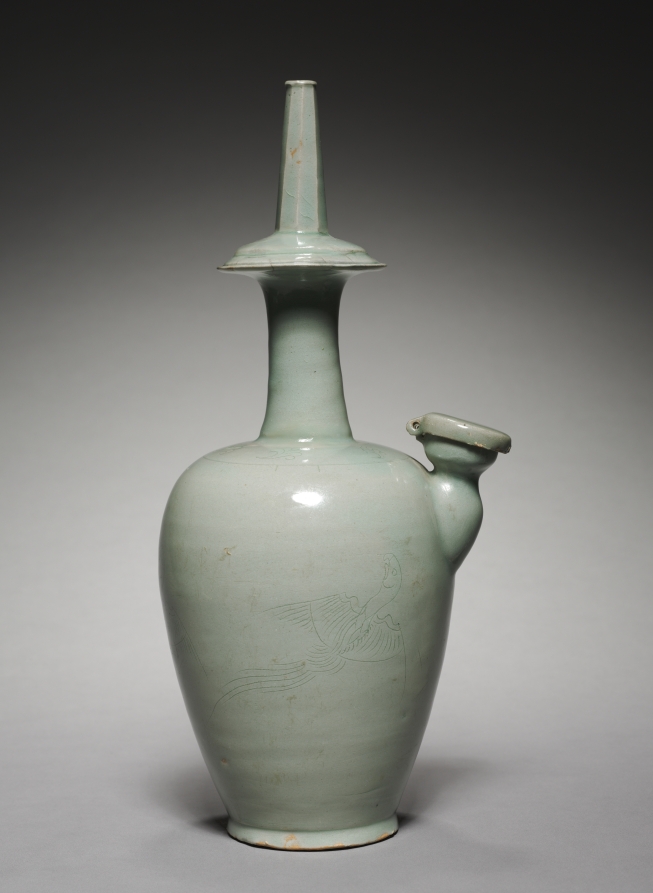
Water Ewer for Rituals (Kundika) with Incised Parrot Design, from The Cleveland Museum of Art
The Cleveland Museum of Art · Open Access · Reuse terms

Korea, Goryeo dynasty (918–1392) / 1100s

Water Ewer for Rituals (Kundika) with Incised Parrot Design

Water Ewer for Rituals (Kundika) with Incised Parrot Design

The Cleveland Museum of Art catalogs Water Ewer for Rituals (Kundika) with Incised Parrot Design as ceramic (Korea, Goryeo dynasty (918–1392) · 1100s).

Unlike most existing examples that have an image of a willow tree or lotus pond, this ewer bears an image of flying parrots delicately incised on its surface.

SERENDIPITYA little unexpected
FamiliarWeird

The museum identifies this ceramic as stoneware with celadon glaze, incised and carved decoration.

The museum's collection notes: This distinctively shaped celadon vessel is a kundika. With a spout on one side, this type of vessel is often used in Buddhist purification rituals. Unlike most existing examples that have an image of a willow tree, this work has a rare flying phoenix design incised on its surface. During the Goryeo period (918-1392), about 260 kilns operated in mainly Jeolla and Chungcheong provinces, meeting a soaring demand for high-end products like this example.

The Cleveland Museum of ArtWater Ewer for Rituals (Kundika) with Incised Parrot Design

Original explanation based on the sources above. Images carry their own reuse terms.