A CLOSER LOOK
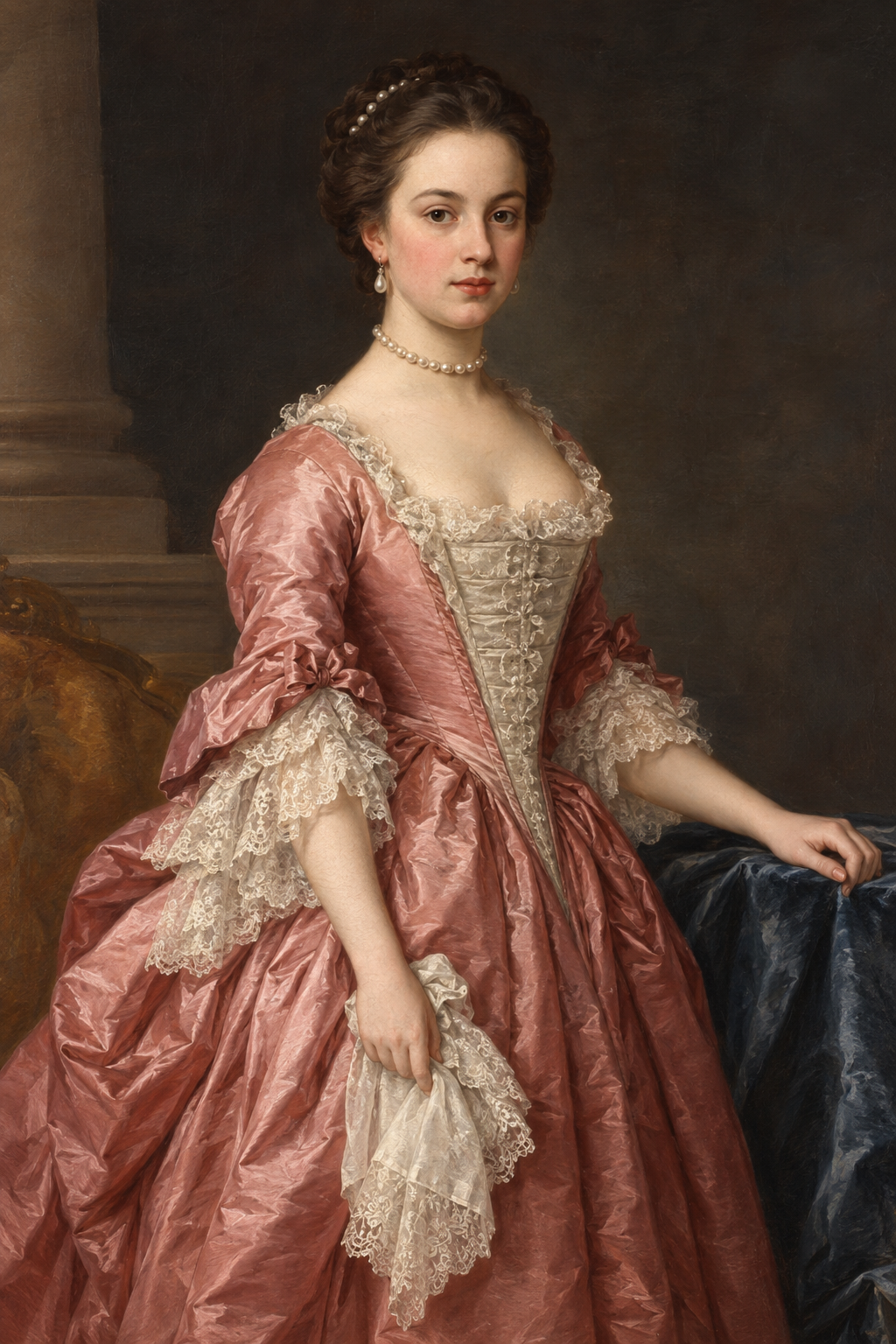
The Art Institute identifies the sitter as twenty-year-old Abigail Chesebrough and dates the portrait to 1754, when Joseph Blackburn was working in Newport, Rhode Island. Her elaborate dress occupies much of the canvas. Its sheen, lace, and jewelry supplied viewers with evidence of refinement and the resources required to commission a fashionable portrait.
Blackburn was an English painter who worked in Bermuda and the British colonies of North America. The National Gallery of Art records his Newport activity and scholarship on his sitters there. A related 1754 portrait at the Metropolitan Museum depicts Abigail’s stepmother, Margaret Sylvester Chesebrough, wife of the prominent merchant David Chesebrough. The Met emphasizes Blackburn’s ability to render drapery and make sitters appear elegant.
That family connection changes what the clothing can tell us. Brown University’s portrait collection describes the Chesebrough family’s silk and linen finery as an indication of wealth and status. The image preserves a public presentation chosen by an elite household; it does not provide transparent access to Abigail’s private character or daily experience.
The title identifies Abigail through her later married name, Mrs. Alexander Grant, while the painted person was twenty years old. Keeping both names visible helps separate the sitter from the cataloging conventions that frame her through marriage. The generated illustration on this page evokes the documented age, period, textiles, and portrait function. It is not a likeness of Abigail, a copy of Blackburn’s painting, or evidence for details absent from the cited records.